
Hardly a public statement of direction has come from Netflix, one of the foreign platforms that has invested heavily in Nollywood in recent years. But that momentum noticeably slowed at the beginning of the year, prompting many to wonder why. A number of reasons have circulated. Some yet-to-be-confirmed reports (which we can only call rumours for now) point to mismanagement of invested funds as part of the issue.
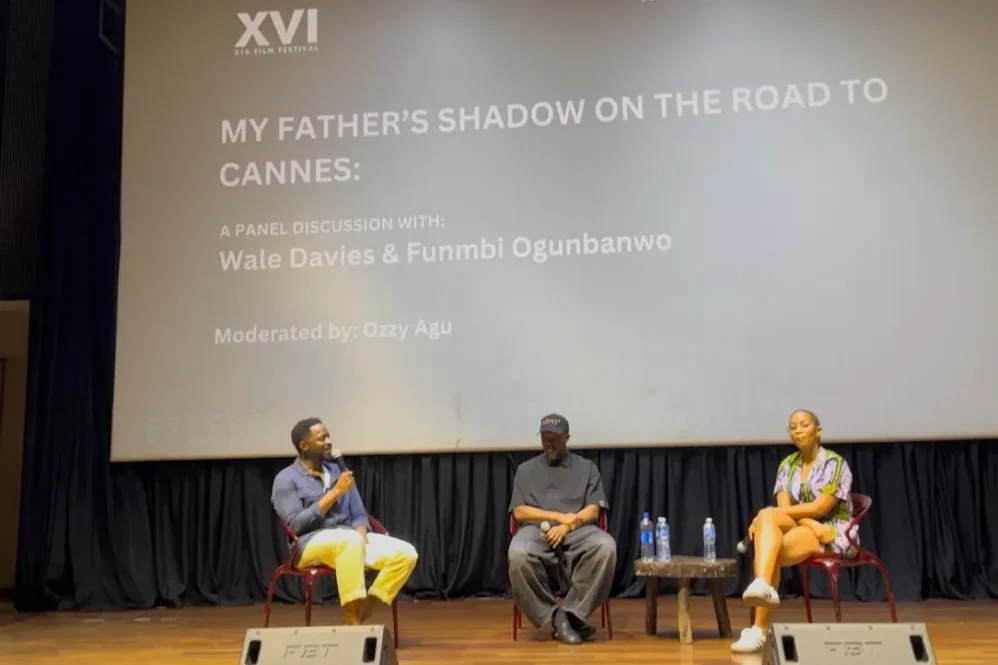
It is an unfortunate development, especially at a time when access to funding has become a major topic in the film space. It goes hand in hand with the region’s distribution challenges. Funds, grants and other forms of support are frequently announced but often fail to reach the intended recipients, a point Wale Davies highlights. The matter came up at AFRIFF, resurfaced during a panel in Cologne earlier in the year, and emerged yet again during the My Father’s Shadow Road to Cannes panel on Day 3 of the S16 Film Festival 2025. And it will continue to circulate in private circles, because the industry is broke, and uncertainties are everywhere.
(Click to Follow the What Kept Me Up channel on WhatsApp)
During the panel, responding to the conversation around My Father’s Shadow representing Britain at the Oscars, Wale Davies (My Father’s Shadow screenwriter) used the moment to call for better access to funding at home. As he and many others have noted, those who bring the money are ultimately positioned to claim ownership of the films.
And when foreign entities decide to invest in our films, transparency becomes essential in building long-term trust. It is never only about the immediate project but about the new doors it could open. Funmbi Ogunbanwo (My Father’s Shadow producer) emphasised the need for more community-minded thinking in decision-making. Filmmakers are not just protecting themselves but also the stories. Rebuilding trust will require filmmakers to commit to honesty and transparency, resisting the lure of quick gains and thinking instead about the future.
The panel also explored Wale’s creative process as a screenwriter, the complexities of international co-productions, and the broader need for a more conducive artistic environment, one where systems and structures exist to support filmmakers just as they do in any other production-driven industry.
Become a patron: To support our in-depth and critical coverage—become a Patron today!
Join the conversation: Share your thoughts in the comments section or on our social media accounts.


2 Comments