Berlinale: Not to get too personal, I have family members across four continents. Over the past five years, we have had at least two weddings and a funeral to attend. Those are the only times we are certain we might see one another, especially on our root continent. A different combination of people attended each of the three events, never the same faces. I fear that we are dispersed for life, never to be in the same place at the same time again, despite our shared and interwoven memories. The same applies to many more people in this modern era.
(Click to Follow the What Kept Me Up channel on WhatsApp)
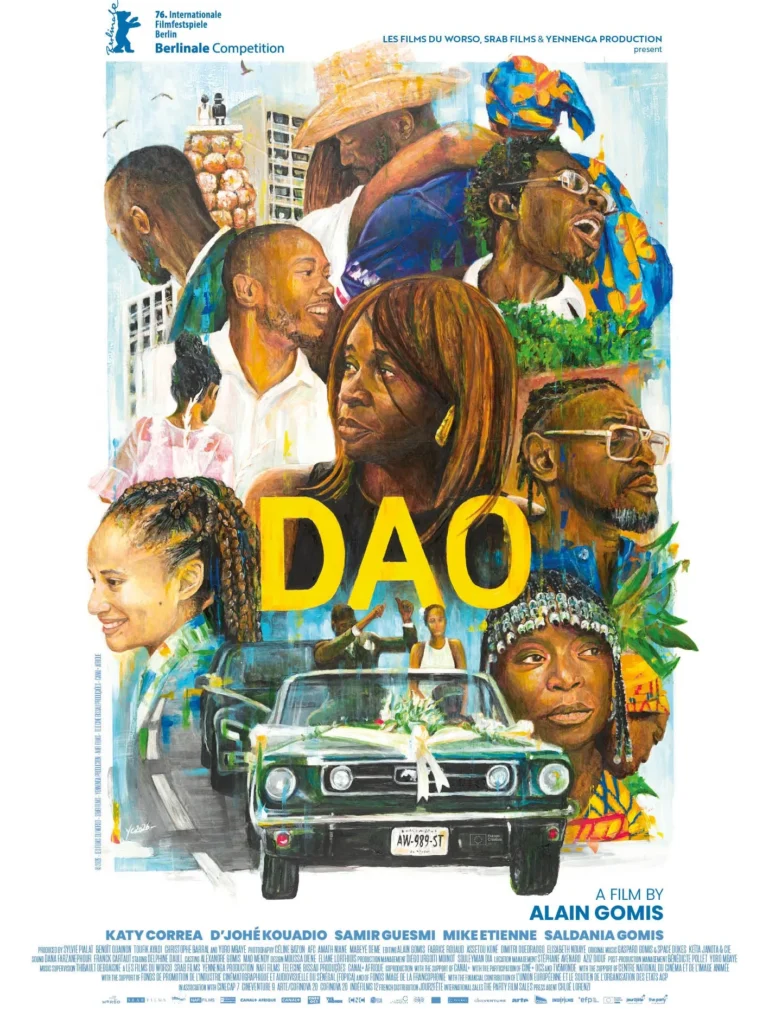
I went into Alain Gomis’ latest not knowing what to expect, having never seen a film from him before (late to the party, I know). But I wish I had known that it was three hours long. Anyway, I was still drawn into the experience of the film, even as the predominantly white adult crowd at my press screening gradually filtered out. I found myself sentimentally pulled into the work as a cross-continental narrative that mirrors the joy, heartache, and blessings of large families, yet cursed by dispersion.
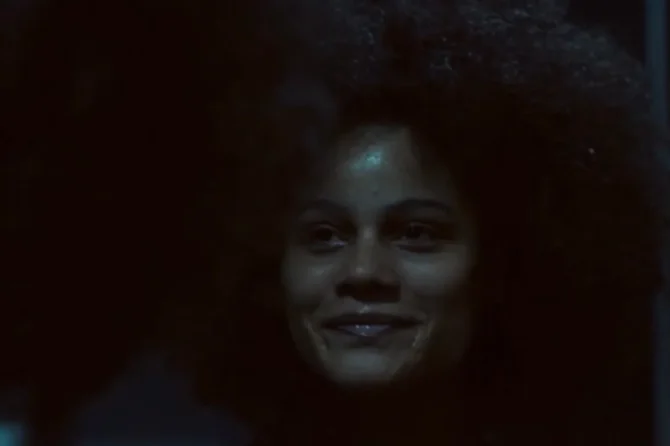
Quickly solving the first mystery of many viewers, the film begins with a definition of its title, “DAO is a perpetual and circular movement which flows in everything and unites the world.” In almost documentary fashion, we begin with a casting session for our protagonist Gloria (Katy Correa), a character whose daughter is about to be married. An off-screen voice says, “the first step is to make this family.” With an unusual interactive approach, actors and non-actors become relatives celebrating a wedding in a French countryside and a parallel narrative of commemorating the loss of their patriarch in Guinea-Bissau. From here, fact and fiction are intertwined, traversing two continents in a movement that frames reality itself.
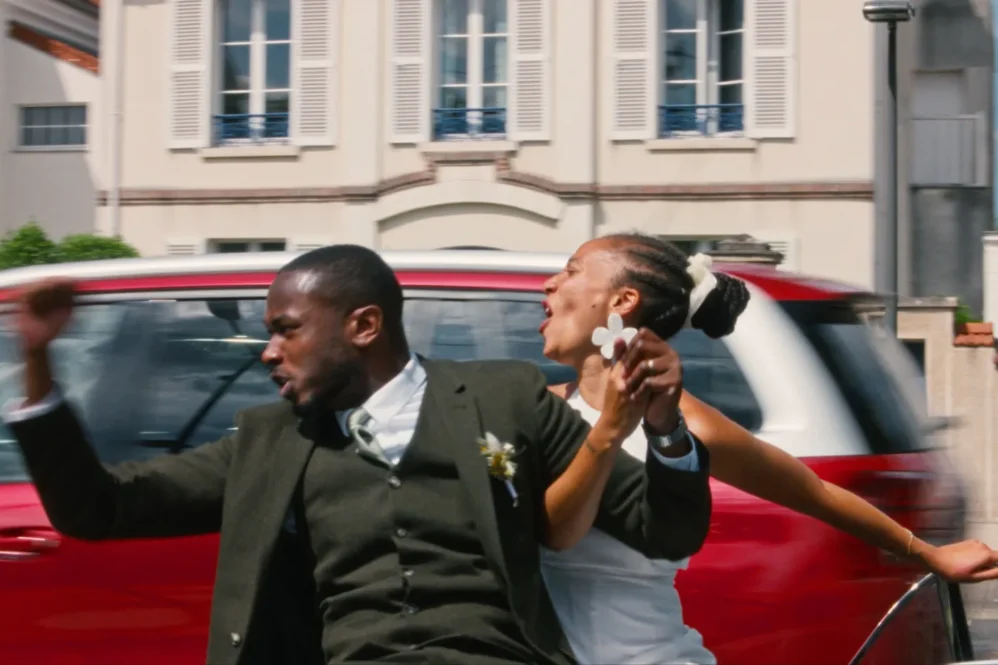
Senegalese filmmaker Gomis—who last took home a Silver Bear in Berlin for Félicité—draws inspiration here from a ceremony for his own father. In Dao, Gloria is a second-generation immigrant in France navigating her daughter’s high-end quaint wedding and the memorial of her father, the first in their community to migrate to France. The film constantly moves between these two major life events without marking how far apart they exist in time. They bleed into one another, linked by memory.
The funeral in Guinea-Bissau marks the first time back home for her biracial daughter (D’Johé Kouadio). She is introduced to many family members she has never met yet remains connected to through an instant curiosity and embrace into a stranger world. She participates in traditions and ceremonies with this curiosity, filled with a range of emotions. Meanwhile in France, her wedding ceremony unfolds. Across both grand events, we experience market runs, negotiations over funeral size, the celebratory noise of a wedding convoy heading to the wedding reception, and adults reminiscing about childhood punishments justified as love while taking over a garden football game from their children.
These are the familiar scenarios and arguments of family life. I have been in rooms where such debates were had. What kind of funeral do we want? One that honours the dead or one that simply brings the living together to celebrate? Dao lingers on these mundane yet deeply intimate details of planning, down to the traditional rites. The camera observes patiently through long takes, attentive to process in ways that echo documentary filmmaking. Interviews with women of African descent, scattered across the film, speak to immigrant life in France, belonging, and the intercontinental nature of modern families shaped by colonisation and migration.
Dao is a film of relationships. Relationships with people, with place, with present love, lost love, close ties, and the wider communal family. On the family side are uncles, aunties, cousins, and great aunties scattered across both worlds, including the fledgling next generation. These are scattered seeds with one main root from Africa, now growing branches across continents. They fight, argue, feel the emotional swell of reunion after long separations, and most importantly, they still love one another.
As migrants living in foreign lands, these events also serve as identity check reminders. When we return for such family gatherings, there is a silent reminder that comes in different ways. Many times, you can feel lost, belonging neither here nor there. Abroad, you are not fully accepted; at home, you are seen as a foreigner who only returns occasionally and “forgets” them when you go back “home”. So, where is home really? What these weddings and funerals do, regardless of where they take place, and beyond the interactions that might mark you as an outsider, is remind you that you really belong somewhere.
The project feels deeply personal to Gomis, a celebration and reflection of the plurality of African immigrant life. That observational patience can at times become a liability; the film meanders, its breadth diluting narrative urgency. Yet its insistence on staying—with people, with process, with memory—becomes a defining strength.
Watching Dao, it dredges up my own memories and past experiences with family on different grand occasions and even preps me for the future ones, because this dispersion will exist across further generations, even after I am gone. Be it forced or voluntary migration, or revolving globalization, in an increasingly individualistic world, is there a place where one can continuously enjoy the word family as a verb, as authentically presented by Gomis. An epic in both scope and emotional reach, family becomes a verb that moves, that breathes, that kicks and appears and disappears, while enduring even in hibernation. Here’s to family!
Produced by Les Films du Worso, Srab Films, Telecine Bissau Produçoes and Yennenga Productions, Dao had its world premiere in competition at Berlinale 2026.
World Sales is handled by The Party Film Sales.
Become a patron: To support our in-depth and critical coverage—become a Patron today!
Join the conversation: Share your thoughts in the comments section or on our social media accounts.
Side Musings
- The weight of the crew is also family-size like with multiple editors and multiple cinematographers.
- Going into a 3-hour film without knowing is something. For a film that has at least 3 false endings for that matter. What an experience in the mundane.
- Seeing so many Gomis names in the end credits, I was like ok, it’s a family thing!