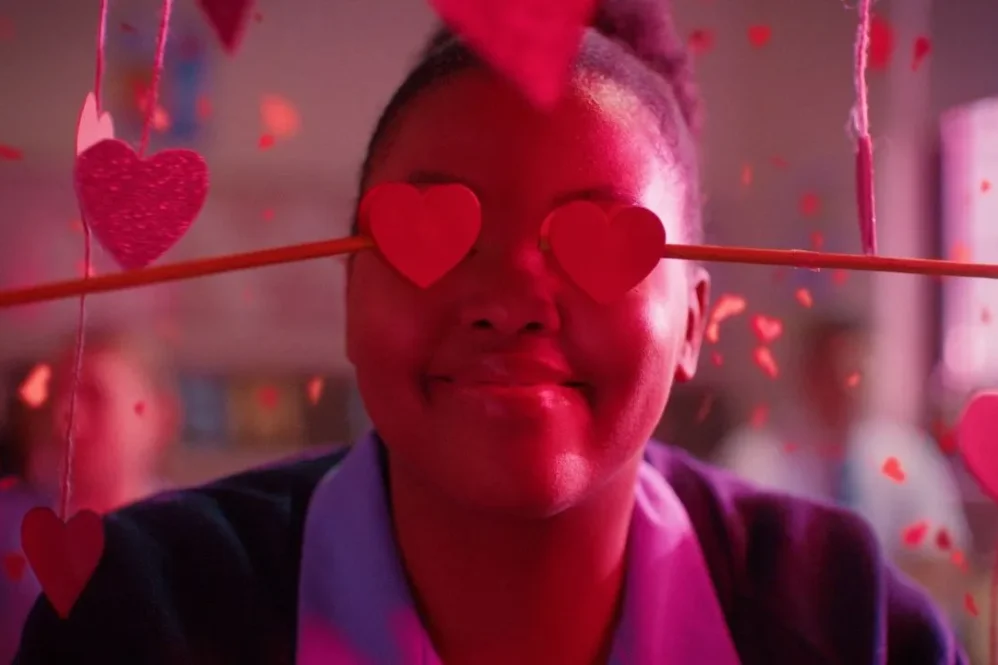
Berlinale: African films that are filled with joy at international film festivals are rare. That is why Kenyan filmmaker Wanuri Kahiu’s Afrobubblegum movement is important as more attention turns towards African films. We need to make our films fun, unshackled by the burden of trauma, war, you know, the familiar that often makes it in to be taken seriously on the global festival circuit. Black Burns Fast fits squarely as an Afrobubblegum film, a film almost obsessed—in the best way—with Black joy in a queer high schooler. It feels quietly radical.
(Click to Follow the What Kept Me Up channel on WhatsApp)
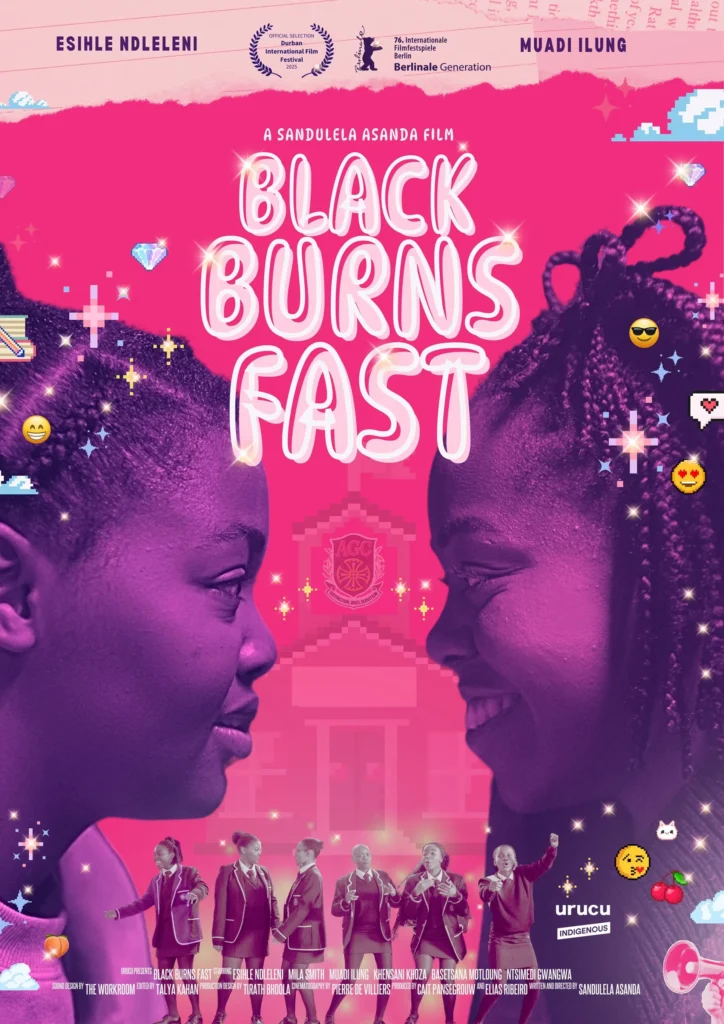
Directed by Sandulela Asanda (who previously screened her short Mirror Mirror in Berlin in 2023, a condensed version she now expands here), Black Burns Fast is framed as a love letter to her younger self. It follows Luthando (Esihle Ndleleni), a high-achieving Coloured student at an elite, predominantly white all-girls’ Anglican school in post-apartheid South Africa. Her place within the school is constantly framed as a stroke of privilege granted rather than earned, until the arrival of Ayanda (Muadi Ilung), a confident, financially better-off new Coloured student whose presence begins to destabilise everything Luthando thinks she knows about dorky herself.
In many ways, the film hits the recognisable beats of the YA high school genre. We experience the awkward sex-ed classes, dining hall politics that mirror social segregation, test-answer comparisons, cliques, crushes, and the paralysing internal monologue that precedes saying a simple “hello” to someone you like. Director Asanda renders Luthando’s internal life visually, such as her anxieties, imagined conversations, and emotional rehearsals spilling playfully onto the screen in ways that keep the tone upbeat in the early stretches of the 100-minute film.
Black Burns Fast is also a queer coming-of-age story that flips the familiar heteronormative arc of teenage boys learning how to get closer to their crush. Here, the confusion, curiosity, and self-discovery are girl-on-girl, unfolding once again with full joy. Luthando doesn’t quite know what she feels for Ayanda, only that she feels something, right from first sight. That awareness arrives gradually, and then all at once, as she’s forced to confront the push and pull between becoming who she is and remaining who society expects her to be.
While maintaining its fun and bright nature, the film still touches lightly but deliberately on contemporary South African realities, such as school policies that forbid speaking indigenous languages dismissed as “vernacular”; racialised expectations of performance and gratitude; and the idea—evoked in the title—that Blackness is held to a different standard. As the director explained during the post-screening Q&A in the packed screening room, like darker matter in science that burns quickly, there’s no room for error here.
Crucially, Black Burns Fast resists the gravitational pull toward solemnity and woes that often defines queer African narratives on screen. Its interest lies less in misery than in the joyful, messy business of self-pleasure, friendship, and desire. In sidestepping the politics of sticks and stones, however, the film occasionally sidesteps conflict altogether. Luthando’s friendship fallout with her best friend Jodie, introduced with an early proclamation of eternal loyalty, is never meaningfully worked through on screen. When a late-film scandal causes her carefully balanced world to implode, the narrative slows noticeably in its final stretch, losing some of its earlier buoyancy as relationship tensions are resolved with a certain script convenience.
Still, the film’s refusal to dwell on sadness, even when the genre and society seem to demand it, remains its defining gesture. In an era where even glossy African teen dramas like Netflix’s Blood & Water have tilted increasingly toward overly serious themes, Black Burns Fast offers a welcome alternative in an earnest delightful fashion.
We need more of these African films at festivals, in the main competition. Festivals and filmmakers should take note.
Black Burns Fast screened in the Generation 14plus section of Berlinale 2026 for its International premiere after a world premiere at Durban in 2025. Produced by Urucu Media, it is expected to be released on Prime Video later in the year.
Become a patron: To support our in-depth and critical coverage—become a Patron today!
Join the conversation: Share your thoughts in the comments section or on our social media accounts.
Side Musings
- The director cited Bottoms as a film she watched with the cast before filming, during the Q&A.
- With a budget of 600,000 dollars, the film was shot in 24 days.
- In case this point was missed, my point is balance in the kind of African films we see at int’l festivals.
- Black Burns Fast is the closing film for BFI Flare Festival 2026.