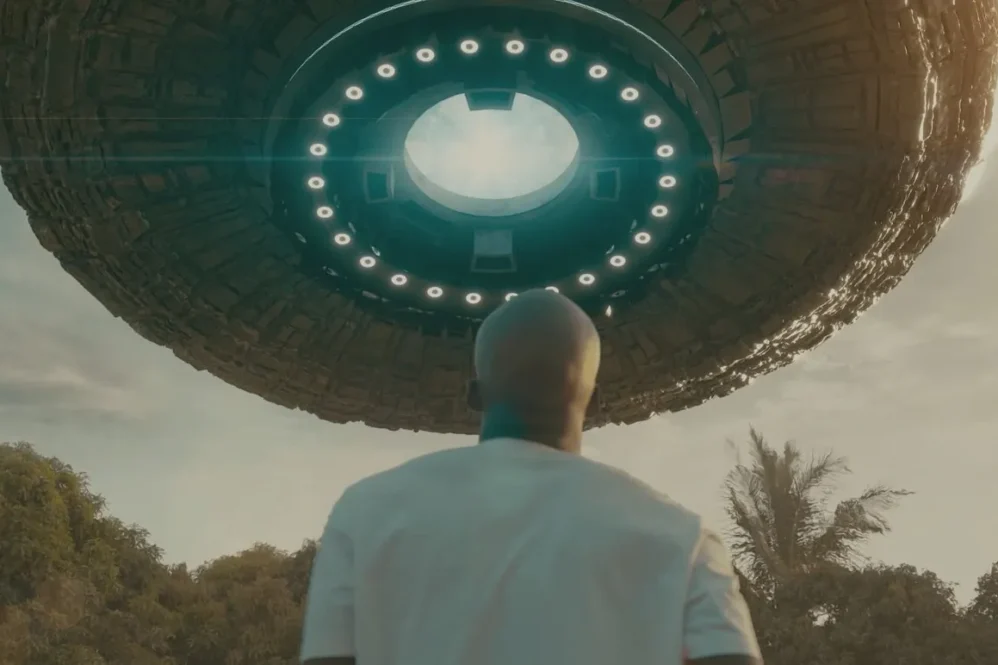
Berlinale: There was a time The Critics, more known as The Critics Company, wanted to make comedy skits but with a twist of VFX. They were hoping to create an alternative to the common slapstick skits prevalent in the creator economy that enabled homemade media production. This observation is from the first issue of our Nollywood’s Hidden Men and Women series in 2022. In those early years, there was also a confusion, even misunderstanding, about who they were (not one of us “bitter” film critics, by the way) and what they did (scifi-leaning projects with homemade special effects). Regardless, the name itself came with more pressure to do better as they came of age.
(Click to Follow the What Kept Me Up channel on WhatsApp)

The formative years of The Critics took place during the peak content democratisation era that a smartphone and the internet afforded everyone, amid major national events and smaller, personal conflicts within the collective, which we are now intimated with in this documentary. The democratisation of content creation (and, by extension, filmmaking) meant that this group of boys (and girls) could make DIY short-form sci-fi videos and reach an audience on YouTube. At one point or another, many of us have watched their diverse, mostly make-believe videos (about 54 short films, according to the press kit). So, what is their own non-fictional backstory, and what key perspectives did the carefully curated, VFX-ed and edited content era not let us in on? While Crocodile offers many insights, moments of inspiration, amazement and shock, its choppy nature leaves us with far more questions about these ingenious minds. For many, that might not be satisfying.
The documentary takes its title from Crocodile City, the moniker of Kaduna (the city where the Critics are based and have grown up). From its earliest stretches, we are introduced to what feels like a large, bustling communal extended family of cousins and possibly, family friends and neighbours. Not directly getting introduced to each person, but through the sheer number of bodies we see in the household, including even younger children who are folded into their various productions depending on what each project demands.
In the early days, their joy is infectious. They experiment with VFX through minor, sometimes silly projects shot on their smartphones. They include superhero antics, disappearing acts, gunshots and blasts, like curious children discovering a new play tool for the first time. Inspired by what they had seen on screen, they act, produce, direct and edit their own daring action-fused projects, uploading them to YouTube. The platform becomes instrumental in propelling them forward, much like the internet did for Ikorodu Bois (known for their zero-budget film recreations) and Madu (the viral ballet boy) in the same 2020s era. With a smartphone, an internet connection, and a congregated audience for just one video of virality, a life can change drastically, especially from so-called third-world contexts.
In voiceovers, The Critics describe their DIY filmmaking (honed without any formal training) as an escape from life’s incidents despite resistance from parents. For Godwin Josiah, it is the death of his mother. His cousin Raymond Yusuff recounts the hurdles at home. His parents are unhappy about their filmmaking venture, especially as his father is a pastor, which forces them to keep their creative pursuits secret. The familiar Nigerian parental suspicion that whoever you spend time with is a “bad gang” if they are doing what they don’t approve of nearly keeps them apart early on, despite Raymond’s attempt to explain their passion in a two-page letter that only angers Raymond’s father further.
Crocodile, drawn from footage recorded across the years, plays out as a unique coming-of-age story for two parties. We follow both the collective as a whole and Godwin as an individual as he begins to break away to do his own thing. Internally, they push one another to grow through roles that each of them take up as core members within the group. Ronald Yusuff works on props and craft, Raymond usually operates the camera and editing, Richard Yusuff handles continuity. They all perform in front of the camera as well, incorporating other household members where needed.
Across their development, a lot of changes occur. Yet the film does not offer a clear timeline of how things slowly change for them before their bigger moment of recognition. One moment they are shooting with phones and editing with just a laptop; the next, editing across multiple PC screens despite ongoing power outages. How did that transition occur? The answers remain elusive, lending the documentary a disjointed feel. As they grow older and begin to have more serious conversations about what makes or should make an African film, reflecting on their arts and place in the larger landscape, it becomes yet another moment the documentary brushes past.
Their moments of joy arrive in bursts, most notably when a package from J.J. Abrams arrives, unboxed from a wooden crate almost as tall as they are; during a video call with him or the first time they listen to Morgan Freeman’s voiceover for their project. Their admiration for Abrams, films and the scifi genre is unmistakable. Alongside these highs are the persistent Nigerian realities: power issues, fear of kidnapping, police extortion (even being asked for 50,000 naira as teens) and only passing references to the 2020 EndSARS protests and the aftermath of the massacre at Lekki Tollgate in Lagos.
Their first trip to Lagos marks another turning point, as they visit Kemi Adetiba’s set for King of Boys sequel. It is their first time in the city and on a bigger-budget production. Here, their VFX consultancy sees them fixing Efa Iwara’s busted lips for continuity and making gunshots appear real. Their once spontaneous, disorganised workflow begins to evolve into something more structured under the guidance of an older manager, Ridwan Adeniyi, until a breach of trust forces them to part ways. While Crocodile provides answers for those who kept up with the group through the same internet era and remember their social media posts dissociating themselves from Ridwan, it raises some cultural questions and reminds us what a letdown the country is once again. With Ridwan’s exit, leadership tensions emerge as the documentary begins to tease Godwin’s pursuit of music. His individual evolution threatens the cohesion of the collective, forcing them to confront what lies ahead.
Crocodile is a scattered look into various moments of their evolution from teens to youths. We are presented fragments of lives already placed at a disadvantage, navigating how to catch up in a world where being born in Nigeria can feel like starting a hundred steps behind. It shows how Nigerians constantly create something out of nothing like magic; how the creative sector thrives not because of the government, but in spite of it. As Raymond says in the documentary, their father believes Nigeria would kill them all, expressing his fears about the country’s situation. A smartphone, the internet, and resourcefulness may be all it takes to be saved, but only for one or two out of many frustrated Nigerians.
Their greatest moments of joy, like other individual success stories during the content democratisation era, come from outside the country: viral success, then international recognition and then some local and international press coverage, followed by support from prominent figures across the Atlantic. They are brothers in arms against the material realities that shape life in Nigeria. I think that is where the documentary succeeds the most, in its social dimension, capturing the poor material conditions in Nigeria within which the collective has managed to create. Where is the structure within the country itself for creatives to excel? We are asking for too much. Where is the legal system that defends young kids from the claws of predatory authority? There is almost none. But for every trickling success story, the government would predictably jump to claim a part in their win at some point.
And yet, as Chimamanda Adichie warns of the danger of a single story, The Critics (with co-direction by New Zealand filmmaker Pietra Brettkelly) insist on presenting another side of Nigeria, one of ingenuity, resilience and ambition. By the time the collective arrives in Frankfurt for an experimental exhibition, the growing cracks between Godwin and the collective raise the question: is this the end, or the beginning of something new?
“We are not little kids playing with our phones anymore. We are artists finding our voice.” When Raymond says this, it hits the audience that this is a Bildungsroman of sorts, for kids who have also been forced to grow quicker than they had to, stages of formation that has propelled them into a Berlinale world premiere today and wherever they head to tomorrow. Edging closer to 30, their dreams are maturing and they are facing more realities.
In their 2022 interview with WKMUp, they admitted that their name would bring problems — hopefully good ones — shaped by parental pressure, critical expectations, and early Hollywood attention. Today, with more resources and access, and even loftier dreams, those pressures remain. Yet they continue to navigate them like a magician, returning each time with a bigger trick up their sleeve. We now await the next reveal in their ambitious future.
Crocodile had its world premiere in the Forum Section of Berlinale 2026. It is produced by Pietra Brettkelly Films and Clan Yujo. International sales is handled by Mediawan.
Become a patron: To support our in-depth and critical coverage—become a Patron today!
Join the conversation: Share your thoughts in the comments section or on our social media accounts.
Side Musings
- Another recent documentary that documents a Nigerian that was found due to being a viral sensation, thanks to the self-publishing era, is Madu the ballet dancer. The Joel Kachi Benson-directed Emmy-winning documentary is streaming on Disney+.
- Interesting times for Documentaries in Nigeria.
- Nigerian elders, man. I was wincing at the embarrassment during that attempt at a reconciliation meeting. Of course, they bring religion into it.
- Timelines are just too fuzzy in the documentary.
- The Critics have clearly been bred and built by Hollywood films, most especially Raymond (a crazed sci-fi cinephile) who seems to be the early de facto creative director. I wish we saw more of their engagement with the films that shaped them despite their strict parents.
- The 2020s video content era made some right people famous, as much as we complain about the many annoying ones that offer nothing beyond being nuisance. We should constantly celebrate them.