
Spoilers Ahead!
Morning, Morning
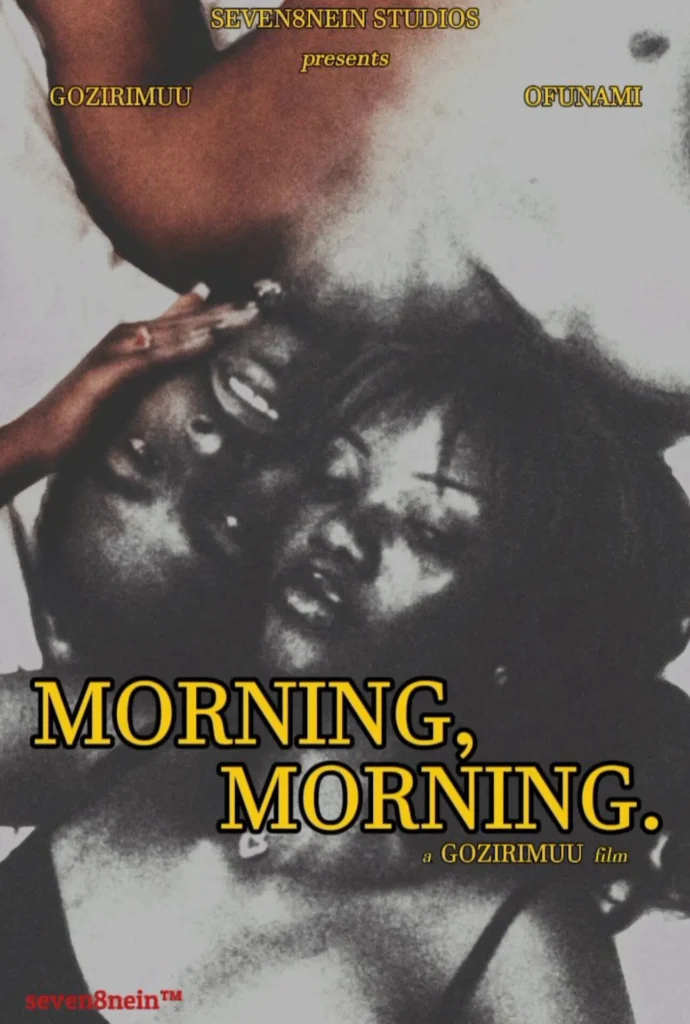
S16 Film Festival: Morning, Morning by Gozirimuu Obinna is a quiet, black-and-white ache. It is a film where no one speaks, yet everything is said through eyes that flinch, bodies that hesitate, a relationship held together by tenderness that now feels foreign. It is poetry. It feels like a letter to self, to a certain kind of quiet that can inhabit a man’s mind and render him helpless even in the face of so much help.
The film alternates between intimate visuals and stark black screens carrying poetic lines. The rhythm of the poem closely mirrors the emotional distance between its characters. Although this is not in itself a less creative way to go about it, there’s a familiar feeling that comes with this style that doesn’t fully engage the viewer’s mind. This is saved, however, by the premise of the story, which, must be said, is as mentally engaging as is supposed.
At the core of the movie is a boy trying—and refusing—to heal, and a girl trying to reach him across a grief she may have caused. We’re not very sure. Especially as we cannot really trust poetic lines. A bathtub scene, with an apple drifting between their bodies, captures their suspended connection. When colour finally arrives, revealing the boy’s face, it feels like mourning tipped briefly into morning—still tender, still unfinished. And quickly, one recognizes the differentiation of morning from mourning from the first screen, how a morning without you is an (un)happy one, and the one without a u is a happy one.
The cinematography isn’t always at its strongest, but you can sense a filmmaker working earnestly with what is available to them.
(Click to Follow the What Kept Me Up channel on WhatsApp)
Back to the Theatre Vox
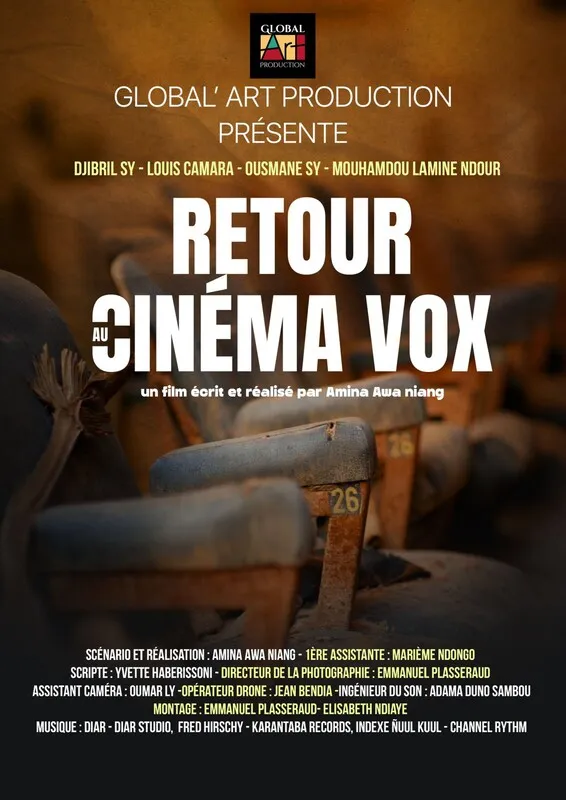
Back to the Theatre Vox is about two boys caught in the crossfire of an old artistic feud. Shot in French and directed by Amina Awa Niang, the film leans heavily on its striking camera work: clean angles, and, in its final scene, a beautifully framed sweep across a decaying neighbourhood cinema where reconciliation finally happens. It is in these visuals, especially the last sequence of the boys and their grandfathers sitting among broken chairs and peeling walls, that the film finds its emotional centre.
The story follows two young friends whose families have long been divided. A childhood birthday invitation reveals the rift: the boys’ grandfathers—one a writer, the other a photographer—abandoned a collaborative project decades ago, each blaming the other. When the boys discover the half-truths both men have lived with, they decide to finish the old film themselves, stealing the script and footage, stitching it together in a studio, and screening it as a peace offering.
But the emotional leap the film asks of viewers stretches logic. The reconciliation happens too quickly, without the messy confrontation that such long-held resentment would realistically demand. How do two boys walk into a studio and without saying much, without doing much, without even offering a payment of any sort, get to have the management invested in completing a project for them? A project that isn’t their idea? The acting, particularly from the adults, is uneven and sometimes distracts from the story’s emotional ambitions.
Perhaps, Back to the Theatre Vox makes up for the confidence lacked in acting and a believable story with a confident visual.
Second Wind
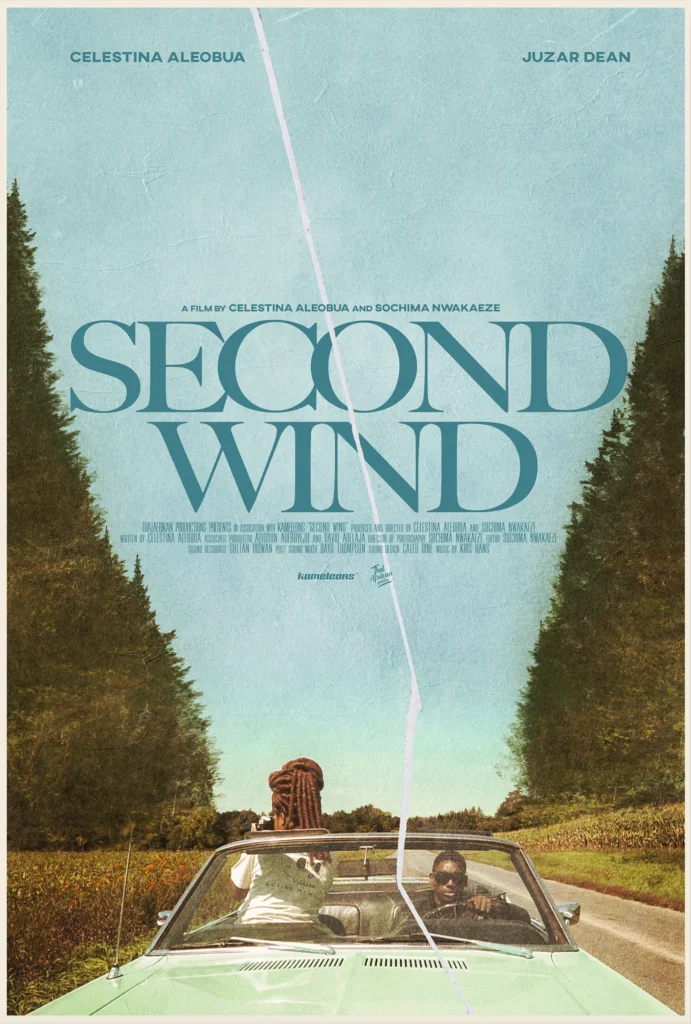
Two friends are driving through a vast landscape dotted with towering wind turbines. The film unfolds almost entirely on this stretch of land—part farm, part industrial field—and its muted colours, the soft hum of wind, and even the open-roof car they arrive in feel symbolic, as though everything around them is waiting for a truth to break open.
Their chemistry at first is easy, familiar. They joke, revisit school memories, wander off to take photos. Everything and everyone seems calm, trusted. Until the film shifts abruptly when a casual question cracks open an old wound. The girl believes he sexually assaulted her years ago. He behaves as though the memory is fuzzy, softened by denial. The argument tightens. His defensiveness spills into misogynistic justification—“We had sex after, and you enjoyed it”—and she pushes back with a kind of quietly loud exhaustion.
There’s a lot of gaslighting in this film, but there’s also the slow surfacing of guilt. Filmmakers Celestina Aleobua and Sochima Nwakaeze directed the film in such brilliant way as to handle this escalation with impressive emotional control. The actors maintain a taut, believable discomfort. The tension is handled with surprising control. Even the moment she reveals she’s been recording him feels earned, not dramatic. The final beats—his panicked retreat, her collapse into the dirt—clears the whole air that accountability, even when forced, rarely brings relief.
Journeys of Singleness
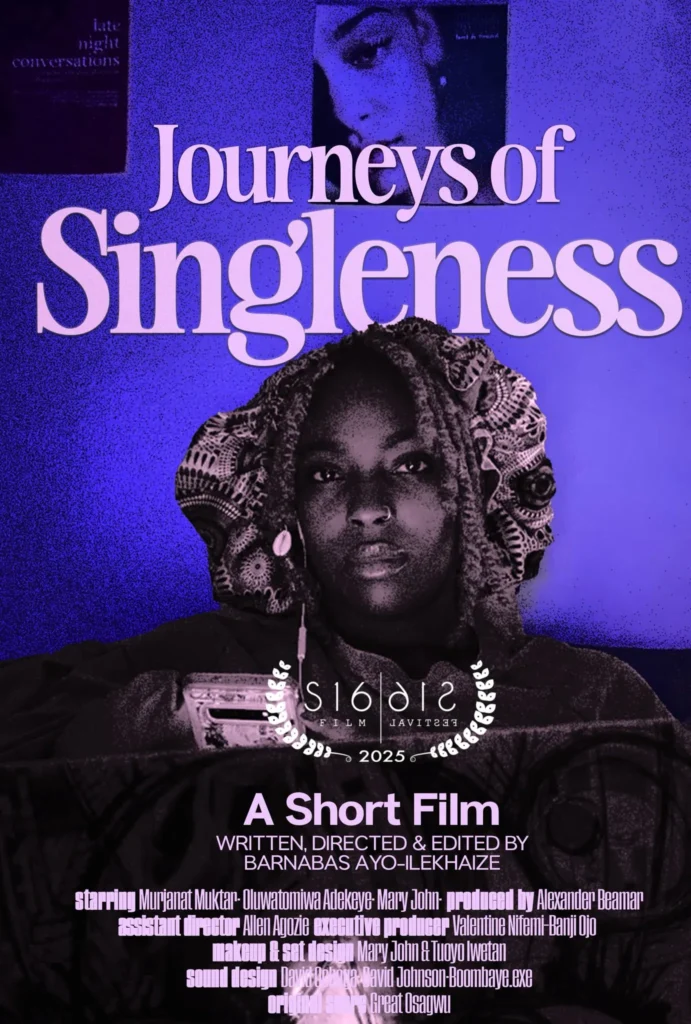
Journeys of Singleness by Barnabas Ayo-Ilekhaize follows Ifebuche through a familiar modern ritual: the exhausting loop of loneliness and digital miscommunication. The film opens with her trudging up the stairs in a rumpled hoodie—a detail that unintentionally undercuts her later insistence on being a “dress-well” kind of woman, but also signals what the film is actually interested in: the gap between who we are and who we perform for romance.
Most of the story unfolds over phone calls. First with her best friend—quick, chaotic, believable—and then with the new romantic prospect she’s been matched with by this same friend. Their week-long conversations feel like the early days of a crush: the soft flirtations, gentle self-mythmaking, etc. But when the agreed-upon date finally arrives, he ghosts her. And keeps ghosting her. The film is sharpest in these quiet moments of waiting, where disappointment sings loudest.
When she eventually “plays him back,” denying him the same access he withheld from her, it’s less triumph than self-preservation. The final beats—her returning to her writing, her sudden lightness—suggest a small reclamation.
Technically, the film wobbles. The acting is uneven, especially from the friend, and the production feels rushed. Still, Journeys of Singleness captures something honest: the pettiness, the humour, the sting, the resilience of dating in a world where intimacy often begins and dies on a smartphone. It gestures toward rom-com but lands somewhere quieter, somewhere more human.
The 5th edition of the S16 Film Festival took place in Lagos from Dec 1-5.
Become a patron: To support our in-depth and critical coverage—become a Patron today!
Join the conversation: Share your thoughts in the comments section or on our social media accounts.