
Earlier this month, we published a story on Nigerian talents to watch across early 2026 international film festivals. Since the end of December, major festivals including Sundance, the International Film Festival Rotterdam, and the Clermont-Ferrand International Short Film Festival have released their selections, with Nigeria’s film industry notably represented through titles such as Olive Nwosu’s Lady and Dika Ofoma’s Obi Is a Boy.
The Berlin International Film Festival (Berlinale), scheduled for February 12–22, 2026, has now joined the list of festivals that have unveiled a full programme. While a Nigerian title is yet to appear in the festival’s main competition, so far, announcements confirm the presence of Nigerian films and talents across other sections of the programme.
(Click to Follow the What Kept Me Up channel on WhatsApp)
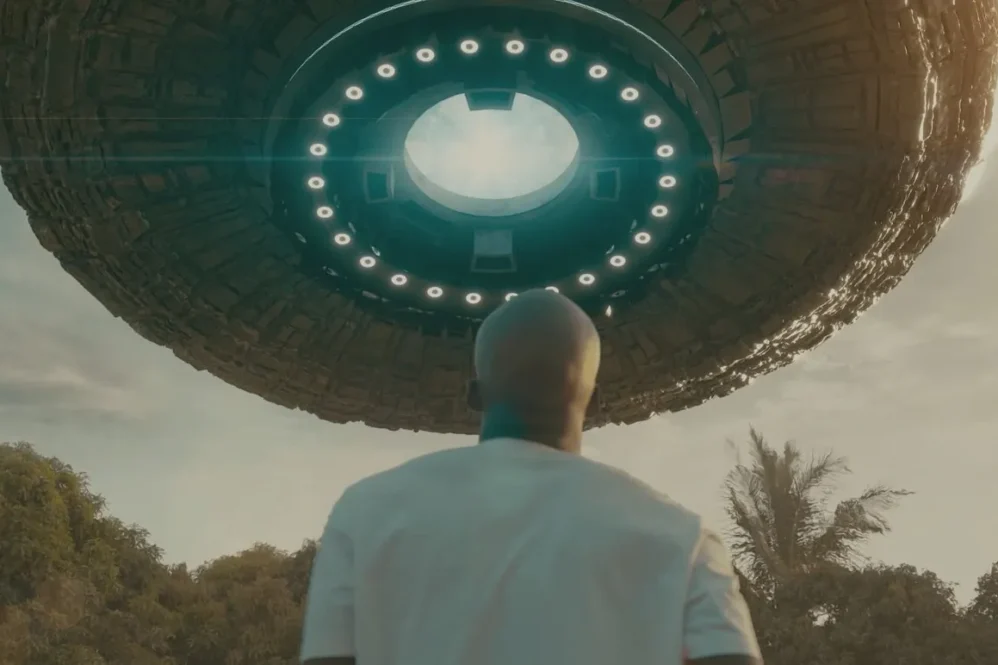
Among the films with Nigerian involvement selected for Berlinale 2026 is Crocodile, a documentary co-directed by Nigeria-based filmmaking collective The Critics Company and New Zealand filmmaker Pietra Brettkelly. The film will have its world premiere in the Forum section. Developed over more than a decade, including a post-production lab at the International Documentary Film Festival in Amsterdam late 2024, the documentary follows the young people of the film company as they use simple, homemade equipment to make their own sci-fi films, documenting their everyday lives and building imaginative worlds. Members of The Critics include Raymond J. Yusuff, Godwin Josiah, Ronald Yusuff, Victor Josiah, and Richard Yusuff.
Karimah Ashadu’s Muscle is set to screen at the Forum Expanded section of the festival, marking its international premiere. The short documentary, co-produced in 2025 with Italy, the United Kingdom, the United States, Germany, and Nigeria, centres on bodybuilders in Lagos. Through close observation of their physiques and daily routines, the film interrogates ideas of embodiment and the representation of the Black male body.
Jérémy Comte’s feature debut Paradise will world premiere in the Panorama section of the festival. Set between Ghana and Canada, the thriller follows two young men whose lives are shaped by the absence of their fathers. In Ghana, Kojo is pulled into a street gang after his father disappears at sea. In Quebec, Tony is also struggling with his father’s absence, and the sudden appearance of a sailor may hold clues to what really happened. Written by Will Niava and Comte, the film stars Joey Boivin-Desmeules as Tony and Daniel Atsu Hukporti as Kojo. Comte is best known for his short film Fauve, which was nominated for Best Live Action Short Film at the 2019 Oscars and won the Special Jury Prize at Sundance. Paradise is a co-production among Ghana, Canada, and France.
Fresh from its world premiere at Sundance, Olive Nwosu’s Lady will have its European premiere at the Berlinale. In her feature debut, Nwosu tells the story of a young female taxi driver whose encounter with a group of flamboyant sex workers draws her into a world defined by both risk and camaraderie, ultimately setting her on a path of personal transformation. Starring Jessica Gabriel’s Ujah, Amanda Oruh, Tinuade Jemisey, Seun Kuti, and Bucci Franklin, the drama will screen in the Panorama section of the festival.
West Africans at 2026 Berlinale Talents and Programmes
Beyond film screenings, the Berlinale Talents programme remains a key platform for emerging voices in global cinema. The six-day summit (February 13-18), which combines workshops, masterclasses, and networking sessions, will bring together 200 filmmakers and professionals in 2026 under the theme “Creating (and) Confusion – Cinema, Chaos and the Power of Discomfort.”
This year, Nigerian filmmaker Dika Ofoma has been selected to participate in the programme as a screenwriter and director. Known for short films including A Japa Tale, God’s Wife, and Obi Is a Boy, Ofoma will be joined by Ghanaian film critic and journalist Alice Johnson, who has also been selected for the Talents programme.
Nigerian participation at the 2026 Berlinale further extends to the European Film Market (EFM), where producer Todimu Adegoke will participate in the Toolbox programme. The EFM programme supports filmmakers by offering access to the global film market, specialised training, one-on-one mentorship, and opportunities to connect with international buyers, financiers, and collaborators. The Nation reports Adegoke was nominated by Blue Pictures CEO Joy Odiete, as participants are put forward through partner organisations rather than an open call.
This year’s presence continues a recent pattern of West African representation at the Berlinale. Most recently, Babatunde Apalowo’s All the Colours of the World Are Between Black and White screened at the festival and received the Teddy Award. Other Nigerian works previously seen at the Berlinale include Ike Nnaebue’s documentary No U-Turn, Esiri Brothers’ Eyimofe, and Michael Omonua’s short film Rehearsal.
Become a patron: To support our in-depth and critical coverage—become a Patron today!
Join the conversation: Share your thoughts in the comments section or on our social media accounts


2 Comments