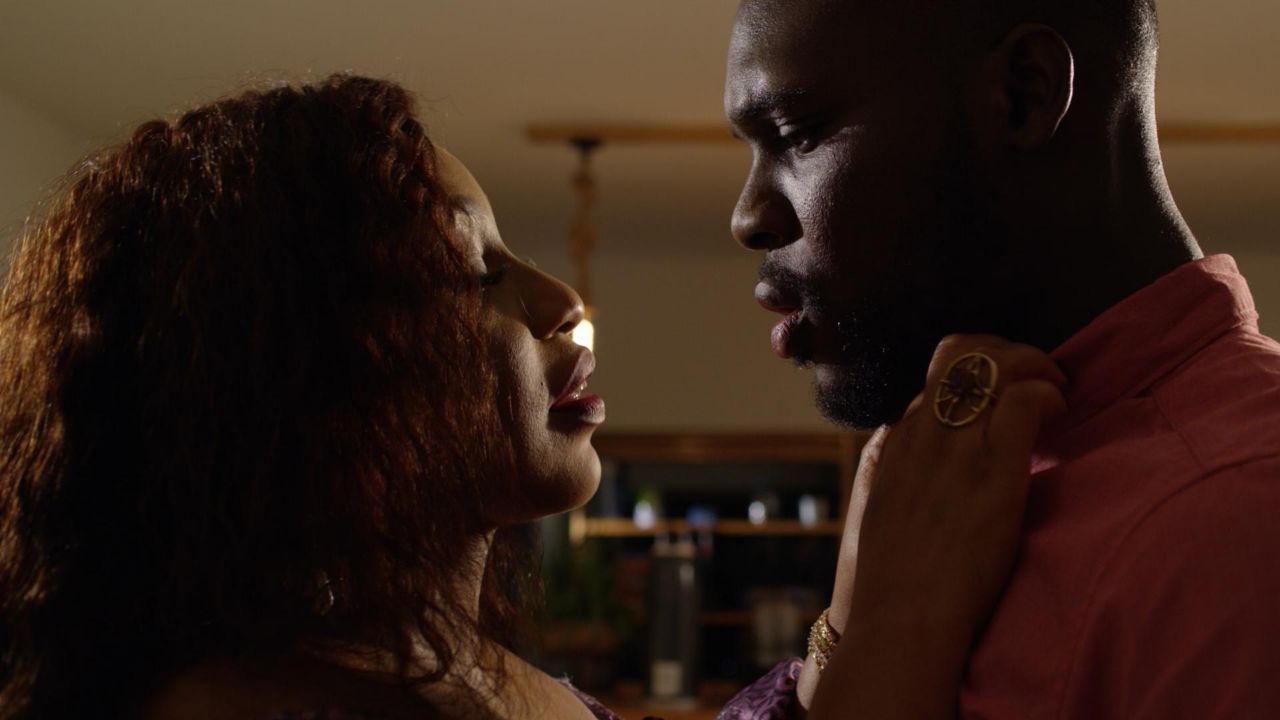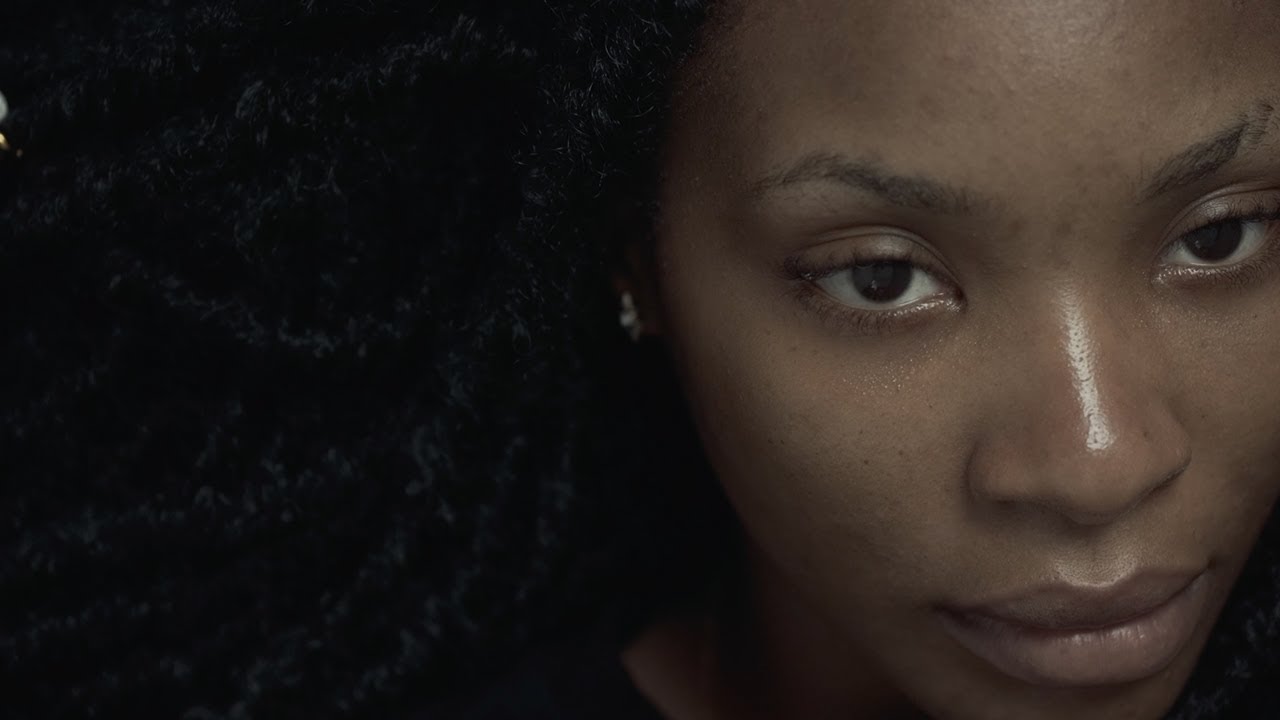
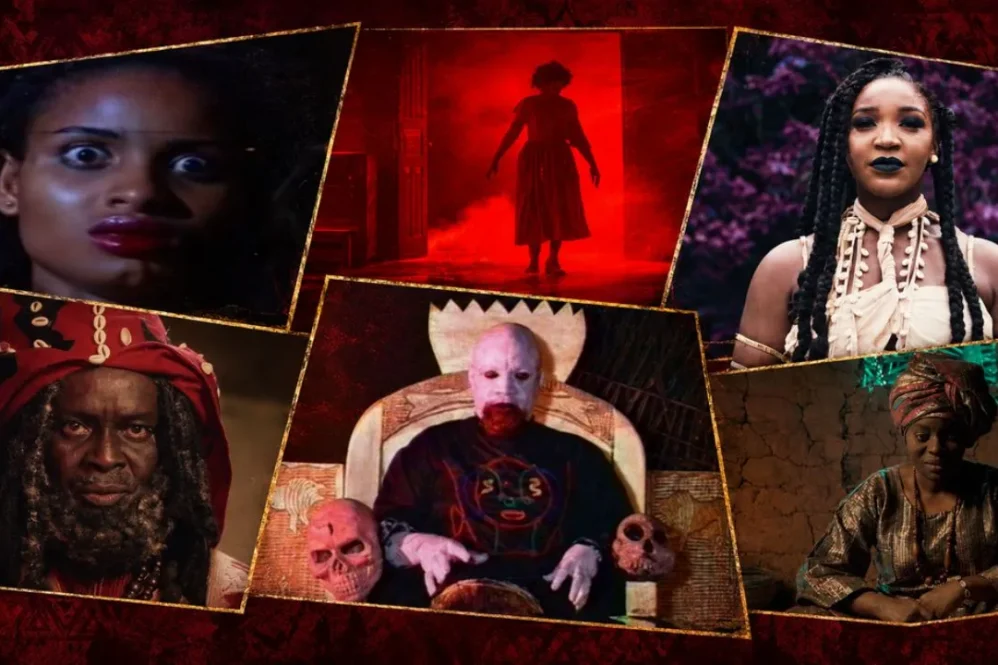
Years ago, watching Twin Peaks felt as illusory as a child looking in a mirror for the first time and feeling the presence of another. It was so familiar yet so strange. Later, I would pitch some friends on why Lynch would love it in 90s Nollywood. Shortly after, I learned that Zeb Ejiro had used the Twin Peaks opening score in his 1996 film, Domitilla. The score featured the electric piano and synthesizers, two pieces of equipment that allowed Nollywood of that era minimalistically punch above its weight class in creating raw atmospheres. Through them, they leaned into a sonic style of storytelling, even developing a distinct style of original film music in the likes of Stanley Okorie and Mike Nliam. My predilection, however, wasn’t solely hinged on the sound; it also bordered on a love for the macabre: the style, usually the shocking special effects that characterized the films of that era.
All these made up the then essence of the industry, which also stemmed from the sense of urgency the industry had, and it encountered one of its milestones in the thriller Living in Bondage (1992). This success set the tempo for the direct-to-video boom of the 90s. More importantly, it led to the rise of the psychological thriller-horror genre. Karishika, Koto Aye, and a wave of Christian-ministry productions built a language of possession and spiritual warfare that still feels deeply visceral for anyone who saw them growing up.
The urgency of those Nollywood filmmakers was influenced and further accentuated by the happenings in Nigeria, mostly the occult and urban legends, so that the things they had to say were unmistakable, and that was the order of Nollywood, until the bandwagoning order of filmmaking caught up. And then, we started jumping from trends to trends, tropes to tropes, and genres and styles, till everything eventually became unrecognizable from the cash-grab-induced jumps. But in moving shops multiple times, we haven’t consolidated our staples, and only have a meagre horror film offering in recent years.
The recent horror (and horror-adjacent) offerings include Idia (2025), Ile Owo (2022), A Song From The Dark (2024), Alive Till Dawn (2026), Ms. Kanyin (2025); in television, there is Netflix’s Madam KoiKoi (2023), and Clarence Peters’ Hex. Nollywood’s possession of the horror genre partly hinged on it having very strong things to say about Nigeria of the 80s, 90s, and early 2000s. And therein lies the first entryway for Nollywood back in the genre.
Play Network’s approach is one way of revisiting what we left behind: remaking classics. Interestingly enough, out of the six films they have remade, the most well-received is 2019’s Living in Bondage, while Nneka the Pretty Serpent (2021) wasn’t well received. Then we have remakes of Karishika and The Diamond Ring in the works; both of which are Nollywood horror classics. But we shouldn’t dwell too much on our glory days when we can take a step further back, coming to terms with the horrors that have been visited on the soul of the nation. We could also revisit much older pasts. There have to be other ways of materialising our portion in the global collective unconscious. Others might want to envision new futures for the sake of us all. It is time to interrogate the things that scare us as a people, to reach into our collective unconscious and see what has been passed down to us. All these tap into a primal propensity for fear.
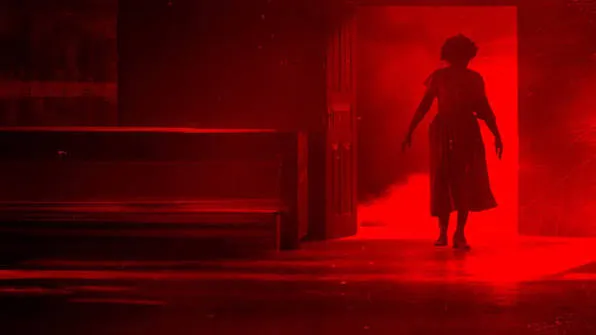
Ingenious as these films were, they were also akin to a knife being held to the neck of traditional religions and cultures. And mainstream filmmakers and religious filmmakers alike wielded this knife as they sought to propagate their agendas. In asking Nollywood to return, one must be careful of what it is being asked to return to.
These golden films of Nollywood burned brightly at the expense of traditional and indigenous religions, because that was the end to which they were made. And they have subsided, partly because the cultural war has evidently tilted towards a side, and continuing to make these films would be tantamount to barking up the wrong tree. They might also have subsided because there is no more sap in the tree. The horrors of those films on the soul of Nigerian culture are so severe and palpable that they extended to everyday life: evangelists invading the homes and places of worship of traditionalists, parents throwing out their children, families assaulting and lynching other family members, villainization of objects and entities.
In Mount Zion’s 1993 film Agbara Nla, a tree was the proxy for spirit villains. Such representations shaped public perception of ancient trees. Now, Mount Zion has largely pivoted from their spiritual warfare and deliverance films to social realism and more “modern” films, save for the 2026 remake of Agbara Nla. No time feels as right as now for reckoning with an African way of life that wasn’t previously protected as now. And with major players exhausting themselves, attempts could be made to undo them in the same vein as it was done: horror films. It’s a debt, long overdue. Nollywood owes Nigeria.
Failure to clear this debt means that Nollywood has been leaving money on the table, as horror films are one of cinema’s most bankable genres globally. And the reasons for this spell some of the solutions to wider conversations about Nollywood as a whole: limited locations, no need for A-list actors, and short shooting time. The Blair Witch Project (1999) initially cost $60,000 and grossed $248 million; Saw (2004) cost $1.2 million and grossed $103 million. Obsession (2026) cost about $750K, and has grossed over $400 million. Backrooms (2026), which cost $10 million, gave A24 its highest-grossing film of all time, earning over $390 million.
Blumhouse’s business model runs on keeping budgets under $5 million and giving directors full reins to execute their twisted visions. These have proven to work, as they provide high-margin profitability for the makers of these films. Tambay Obenson, in a recent Akoroko newsletter, describes this model as “useful for thinking about how African producers might sustain regular production over time when production capital is limited, cinema revenue is uncertain, and access to distribution is concentrated among a small number of companies.” This is further proven by the year-after-year renaissance ongoing internationally. Film has been graced with filmmakers experimenting fear with novelties like POV (Good Boy, 2025) and Screenlife (Host, 2020; Unfriended, 2014). Year after year, filmmakers are pushing the limits of how we safely confront anxieties, and the unknown. With Nollywood’s average production budget hovering below these budgets, the math becomes even more irresistible.
There is also growing evidence that Nigerian audiences are willing to pay for horror. In 2025, Hollywood releases such as Sinners, The Conjuring: Last Rites and Final Destination: Bloodlines delivered strong performances at the Nigerian box office, while the folklore-driven Ms Kanyin generated considerable attention on streaming. According to FilmOne’s yearbook, horror also recorded strong cinema turnouts beyond Lagos, particularly in Abuja, Oyo, Edo, Rivers and Ondo, with Edo emerging as a notable market for the genre. This suggests that the appetite for horror is geographically broader than the industry’s dominant commercial centre. Yet IDIA‘s modest theatrical earnings show that audience interest does not automatically translate into success for local productions. For Nollywood, the opportunity is therefore twofold: to explore horror’s relatively affordable production model while developing the storytelling, marketing and distribution strategies needed to turn an existing appetite for fear into sustainable theatrical demand.
From storytelling, marketing to distribution, the industry has never been devoid of influences. What the industry did wrong was borrow freely from outside while demonising what was already its own. I want to ask what a Nigerian horror looks like that finally faces our cosmology and our history honestly. We have a long journey ahead of us. I don’t want to mourn the past that was meted out to us, but wonder what would have been if we had run our tracks. Had we stayed on the path of horror, we might have evolved a strong language and command of it, like how Black Americans have done with Afrosurrealism.
In Rochelle Spencer’s book “Afrosurrealism”, through the works of Helen Oyeyemi, Colson Whitehead, Tananarive Due, and many others, she highlighted how Black authors use psychological architecture, i.e. surreal worlds, to mirror the real-world psychological challenges of living through dizzying societal and social shifts. These Black writers inhabit the surreal as a vehicle to process real-world trauma, challenge historical oppression, and reimagine total freedom. This has crossed over to the silver screen in the works of Jordan Peele and Boots Riley, Childish Gambino’s Atlanta, to mention a few. Those works present everyday Afro-American life, in all its absurdity and surrealism. Nigeria’s Juju Stories (2021) and The Lost Okoroshi (2019) exist in this vein. Thai cinema shows the same instinct on screen, from Apichatpong Weerasethakul’s unbothered dinner-table ghosts to Ratchapoom Boonbunchachoke’s A Useful Ghost, a grand prize winner at 2025 Cannes Critics’ Week. There is a bottomless ocean of mythos for Nollywood to explore. We haven’t seen ourselves yet; how can we ask the world to do the same? Our collective unconscious and inherited cosmology must be treated as something to inhabit rather than fear.
If Nollywood had not dumped that track, perhaps we might have evolved a complex palette of film and sensibilities, as complex and complicated and as diverse as A24’s slate of films. Their works span from the folk horror Midsommar (2019), and the atmospheric period piece The Witch (2015), and the body horror Saint Maud (2019), and the cerebral thriller Heretic (2024), to the ancestral trauma of Hereditary (2018), to just mention a few. Their outing in Africa had them backing Zambian filmmaker Rungano Nyoni’s 2025 film On Becoming A Guinea Fowl, which put a surreal spin on a familial tragedy, while her 2018 film I Am Not A Witch, through Black comedy, takes on paedi-witchcraft in Zambia. A24 has achieved this by enabling filmmakers to move past traditional horror tropes into more unsettling territories. If Nollywood is to evolve, it must move beyond the industry’s video-club era trademarks and use them as conduits to explore what this generation, filmmakers, and the world fear.
Aside from Nigeria’s and Africa’s variants of fear, the world’s heartbeat has skipped many times, and filmmakers, on these occasions, through horror films, have always mirrored society’s many fears in an attempt to interrogate the human condition. The first Godzilla film saw the world walk hand in hand with Japan. Then, the world tried to make sense of serial killers between the 60s and 80s through slashers and whatnot; there was always something on the fringe of human society, and humanity has always explored it. What is upon the world currently? And what can we bring to the table?
What can Nigeria and Africa conjure with the advent of artificial intelligence, and what does it mean to us? What uniquely African experiences can we, as third-worlders, tap into the collective unconscious in our relationship with AI? I was filled with horror when I saw Nicolas Gouralt’s 2025 documentary, Their Eyes, which examined the lives of AI trainers in the Global South and the horror of the system they work in. Though not horror, it shows that Nigeria- ditto Africa’s relationship with artificial intelligence differs vastly from that of the West, as evidenced in films like M3GAN (2022), Afraid (2024), Subservience (2024), M3GAN 2.0 (2025), and Companion (2025). Perhaps it is time Nollywood explored the other side of that divide while questioning its relation to technology. Are we ever going to explore what technology meant for Africans post-colonialism? Is there any form of haunting with yahoo yahoo? How might Nigerian horror process this “AI” way of doing things?
This essay offers no answers to these questions, nor does it claim horror films are the ginger and holy water for all of Nollywood’s problems. Other questions also worth answering include: who would be watching these films? Is the Nollywood audience even waiting for a revival of the genre? Or whether Nollywood has moved past this? Obenson, in the same piece envisioning the future of African horror films, notes that “success would begin with being able to absorb some failures, learn from them, and still finance the next project.” What better place for Nollywood to start than committing diligently to its past, learning from it, and building from there?
Become a patron: To support our in-depth and critical coverage—become a Patron today!
Track Upcoming Films: Keep track of upcoming films and TV shows on your Google calendar.