We wanted to understand the Nigerian film audience better. When Motunrayo Ojo and I agreed to conduct an independent survey in early 2025, I had little idea what we would eventually do with the findings. Apart from the plan to publish a report through What Kept Me Up and pitch to other film journalists, we did not anticipate that the exercise would eventually contribute to a research project spanning six African countries.
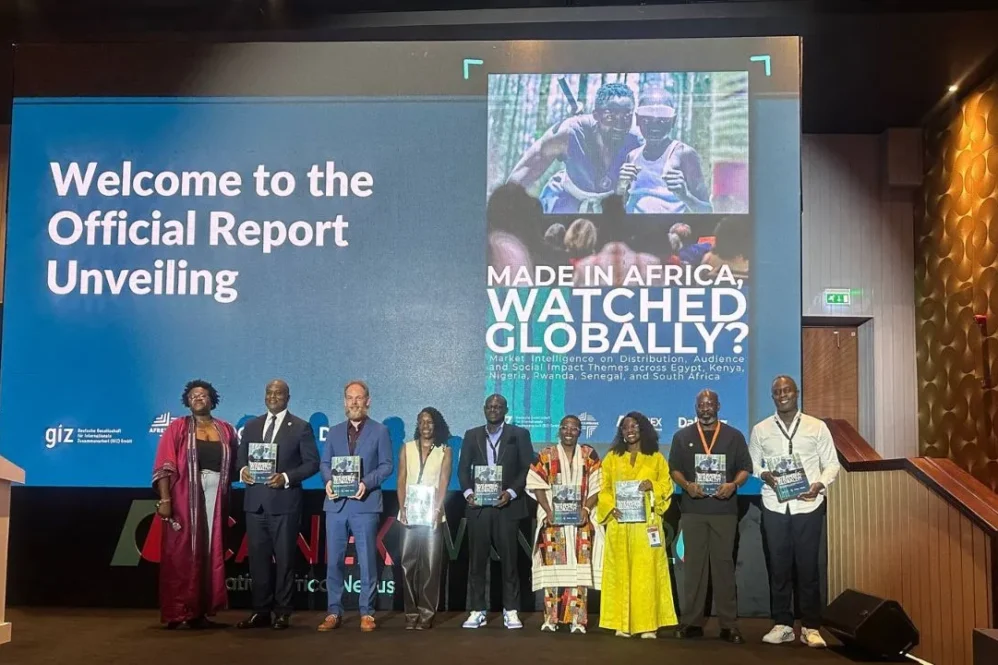
On November 6 2026, Made in Africa, Watched Globally?, a report examining film distribution, audience behaviour, financing and investment opportunities in the African screen sector, was launched at CANEX WKND in Lagos. Commissioned by the Deutsche Gesellschaft für Internationale Zusammenarbeit (GIZ) and the African Export-Import Bank (Afreximbank), through its Creative Africa Nexus (CANEX) programme, and produced by Dalberg, the research covers Egypt, Kenya, Nigeria, Rwanda, Senegal and South Africa.
Among the sources informing its Nigerian findings was a comprehensive survey of 300 Nollywood audience members conducted by WKMUp in collaboration with Motunrayo, contextualised with industry performance data. What started as our independent attempt to understand audience behaviour had become part of a wider investigation into the challenges and opportunities facing African film distribution.
Why We Wanted Our Own Audience Data
For several years, FilmOne‘s annual industry yearbook has been one of the more visible sources of information about Nigeria’s cinema business. Its reports are frequently referenced in conversations about box office, audience behaviour and the state of theatrical exhibition.
Motunrayo, a friend and someone I consider a big sister, who has a strong interest in the creativity and business of film, had repeatedly raised questions about aspects of these reports, particularly the methodology and interpretations. I shared her interest in seeing more independent research emerge.
The concern was about the industry’s dependence on a relatively small number of information sources. FilmOne is itself a major participant in the market, with interests in distribution, exhibition and production. Its position gives it access to valuable industry information, but it also reinforces the importance of having research produced outside the businesses whose activities are being examined.
Independent studies could corroborate existing findings, reveal differences in audience behaviour or raise questions that industry-led reports might not prioritise. Even where the results are similar, the availability of alternative data strengthens the basis for discussion. It gives us all more than one reference point when assessing the market.
At some point, after seeing Motunrayo express interest in conducting her own research, I suggested that we work on one together. I believed WKMUp could provide the platform and access needed to reach respondents.
We agreed to proceed, and the survey ran from January until April 2025.
Collecting the Data
Our research involved Eva Anya, WKMUp’s managing editor, getting her hands dirty on ground, approaching people at cinemas and shopping malls, where many Nigerian cinemas are located, as well as students at the University of Ibadan. We also circulated the questionnaire online through WKMUp’s website and social media channels, encouraging our readers to participate in early 2025. Some readers may remember encountering those requests for participation.
The resulting survey covered 300 respondents and was contextualised with industry performance data. The audience captured was predominantly young, particularly those aged 18 to 34, digitally savvy and familiar with streaming services as an important means of accessing screen content. These characteristics offered insights into the consumption habits of the respondents, although the sample was not intended to represent the entire Nigerian filmgoing population.
Motunrayo led the substantial work of analysing and interpreting the responses, identifying patterns in the data and preparing the findings for publication. She also commissioned a designer, at her own expense, to develop a professionally presented report. By the time the work was completed in July 2025, we had something much more substantial than the simple audience survey I had initially imagined.
The next challenge was deciding what to do with it.
While publishing the findings on WKMUp remained an option, we began to consider whether the research could be useful to a wider group of people and organisations. Having invested considerable time and resources in collecting and analysing the data, it seemed worth exploring opportunities that could extend its reach and relevance beyond a single publication.
I began discussing the project with contacts across the film industry and within the African Film Press network, looking for organisations that might find the research valuable. Those conversations eventually led to an introduction to GIZ, the German development cooperation agency involved in supporting programmes across sectors and countries, including initiatives within Africa’s creative economy.
We presented the research and explained what we had set out to achieve. At that stage, we were primarily interested in discovering whether there was an opportunity for the findings to inform a broader initiative. Monetisation had not been our original motivation, and we were open to considering different possibilities for putting the data to use.
A Place Within a Larger Research Project
GIZ and Afreximbank, through CANEX, were already working with Dalberg on a research examining African screen distribution, audience behaviour and opportunities for sustainable industry growth. Our Nigerian audience data aligned with aspects of the work they were undertaking, leading to further discussions about how it might contribute.
Research of this kind is particularly relevant to an industry where access to reliable and consistent market information remains uneven. Film distribution across Africa involves different theatrical markets, streaming platforms, television networks, informal circulation channels and audience preferences. Understanding how these systems operate is necessary for anyone seeking to develop policies, build distribution infrastructure or make informed investment decisions.
Some of the difficulties facing the industry are already familiar to filmmakers and other professionals working within it. However, translating those experiences into documented evidence, supported by research and industry interviews, can give them greater relevance in institutional and investment discussions beyond informal conversations.
Following our conversations with Dalberg, the WKMUp and Motunrayo audience data was licensed for inclusion in the research. This was a paid arrangement that has helped sustain our work. That financial outcome was particularly meaningful for an independent publication operating in an environment where objective journalism and intelligence are often difficult to monetise.
Our involvement subsequently expanded beyond the licensing. WKMUp contributed research consultancy, reviewed material and provided feedback on aspects of the work as it developed. We also helped connect Dalberg’s researchers with industry professionals for qualitative interviews, drawing on relationships built through years of reporting and engagement with Nigerian and African cinema.
Motunrayo remained closely involved, particularly in discussions concerning the original audience data, new data from other countries, its analysis and contextualization.
Dalberg led the wider research process, while WKMUp’s role was principally that of a data contributor and research consultant.
The Report Finally Reaches the Public
The research was formally launched at CANEX WKND in Lagos on November 6, with physical copies available at the event and digital versions of the six-country study and individual country reports made accessible online.
Motunrayo attended the presentation, while WKMUp and African Film Press were also represented in Lagos by Eva.
For me, it was an immensely satisfying outcome. I was proud of the work we had contributed and pleased to see it become part of a document addressing issues far beyond the scope of our original survey. It was also rewarding to see research initiated by an independent Nigerian film publication find an application within a larger continental project. We are a big believer in cross-continental efforts.
Of course, the existence of a report does not guarantee that its recommendations will be adopted or that the problems it identifies will be addressed. Research alone cannot resolve the structural limitations of African film distribution, nor can it produce the investment needed to develop sustainable industries.
Its contribution is more incremental. Better information can support better questions, which may eventually lead to more informed decisions. As research accumulates, it becomes possible to assess whether previous interventions have worked, where progress has occurred and which challenges continue to require attention.
For industries with significant gaps in publicly accessible information, that accumulation matters.
The Work We Do Beyond Film Criticism
This experience also provides an opportunity to reflect on the different ways What Kept Me Up has developed since its establishment in 2021.
On the back of this news, someone suggested to me privately that some people see us as an industry hater, presumably because of the criticism that forms a significant part of our editorial work. I found the observation amusing, especially when considered alongside the range of loving activities we undertake within the same industry.
Film criticism remains central to WKMUp. We believe Nigerian films deserve thoughtful, independent assessment, and that serious engagement with the work being produced is an important part of the industry’s development. That responsibility sometimes requires us to question creative choices, challenge prevailing narratives and publish assessments that filmmakers or audiences may disagree with.
Alongside criticism, however, we have continued to develop resources and editorial initiatives that serve different needs within the screen sector.
Our release calendar helps audiences track upcoming Nigerian films and television programmes, while our monthly previews guide readers through what is available to watch. Our annual critics’ poll provides a recurring record of critical perspectives on the year’s releases, and our interviews create opportunities for filmmakers and industry professionals to discuss their work in greater depth.
Festival reporting and industry coverage also remain important areas of focus. Through our weekly Nollywood Distilled series, we attempt to identify and contextualise significant developments in an increasingly crowded information environment.
The Nigerian film industry produces a constant stream of announcements, publicity campaigns, premieres, production updates and commercial milestones. Some developments attract substantial attention, while others receive relatively little coverage despite their potential relevance to the industry’s direction.
Part of our editorial responsibility is to distinguish between the volume of information circulating and the developments that deserve closer attention. That includes major commercial stories as well as smaller changes in production, distribution, talent development and industry organisation that may become more consequential over time.
Our contribution to Made in Africa, Watched Globally? extends this work into research and industry consultancy.
I don’t consider these activities separate from our commitment to criticism. They are different aspects of the same interest in seeing Nigerian cinema examined, documented and understood with the seriousness it deserves.
Building on What We’ve Started
One of the important lessons from this collaboration has been the potential value of pursuing ideas without having every subsequent step mapped out. We began our audience survey because we believed independent research was worth doing. The opportunity to contribute to a continental study emerged later, through conversations, introductions and the willingness of different organisations to consider how the work might be useful.
It has also reinforced the importance of meaningful partnerships in sustaining independent cultural organisations.
WKMUp remains interested in collaborations that contribute to a better understanding of African cinema, improve access to industry knowledge or support the development of the screen sector in other practical ways. These opportunities do not necessarily have to begin as commercial arrangements, although financial sustainability remains an important consideration.
We are therefore open to hearing from researchers, cultural organisations, filmmakers, development institutions and other prospective collaborators working on compelling initiatives. We may not be able to participate in every project, but we are interested in opportunities where our experience and resources can make a meaningful contribution.
There are already other initiatives in development that we hope to share more about in the coming months.
For now, I’m grateful to Motunrayo for the considerable effort she invested in our original survey and throughout the collaboration, to everyone who participated in the research, and to the teams at Dalberg, GIZ and Afreximbank/CANEX for recognising the value of our contribution.
We remain an independent media outlet that reviews films, interviews filmmakers, documents industry developments and helps audiences discover what to watch. The research collaboration has expanded what we understand to be possible within that work.
And it began with a simple decision to conduct our own survey.
Become a patron: To support our in-depth and critical coverage—become a Patron today!
Track Upcoming Films: Keep track of upcoming films and TV shows on your Google calendar.