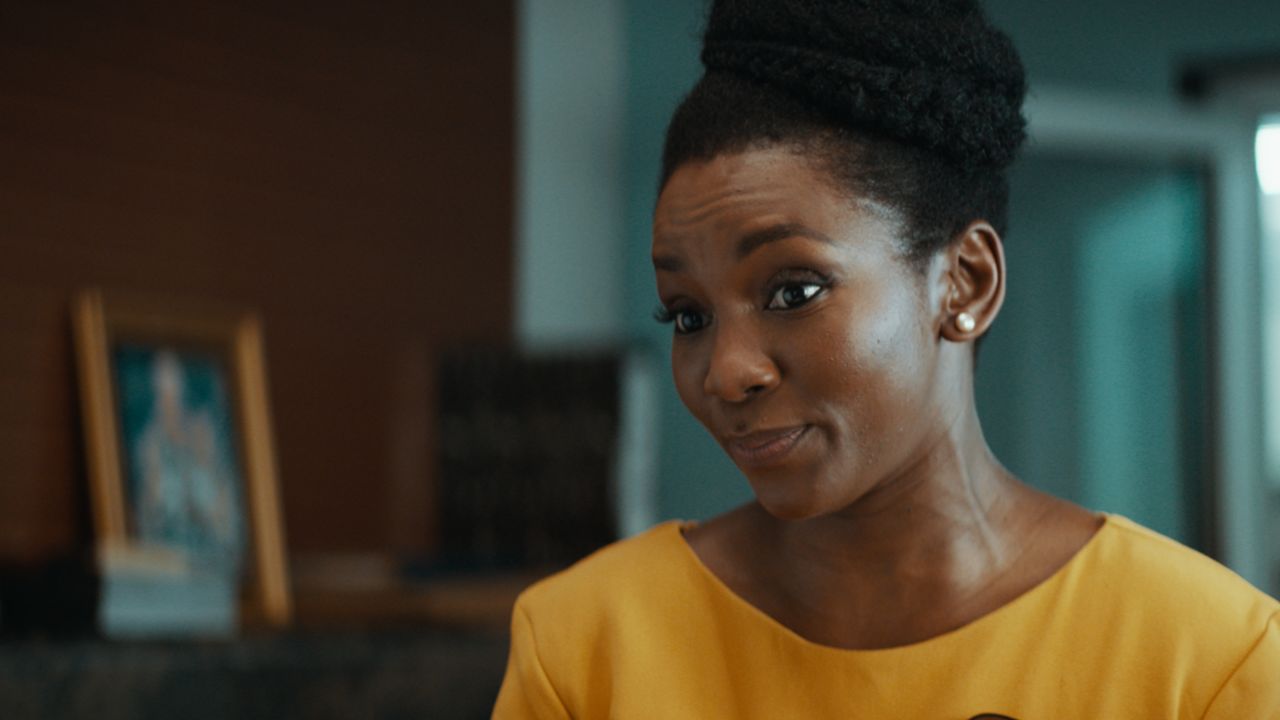
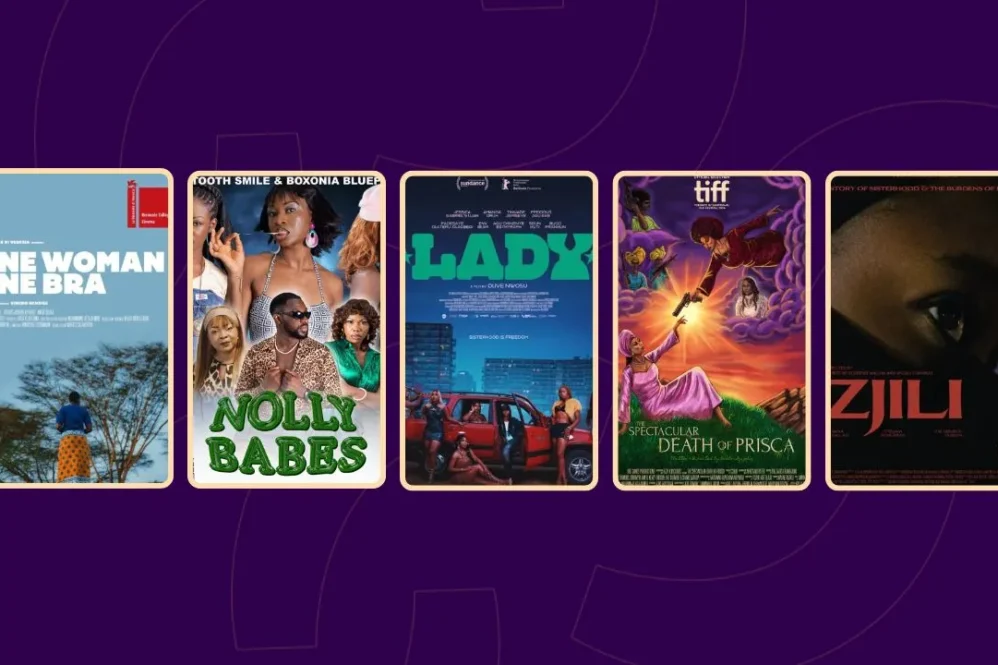
The 15th edition of AFRIFF is set to bring together films from Nigeria, across Africa and beyond, as it returns to Lagos from November 1 to 7.
Our selection of films to have on your radar at this year’s edition includes titles that have spent much of the year travelling the international festival circuit and are now making their way home, celebrated African films worth experiencing on the big screen, notable directorial debuts, returning filmmakers worth checking out again, and short films from emerging talents honing their voices and styles.
From the opening and closing films to documentaries, animation and international award winners, here are 21 titles to look out for, arranged alphabetically. Distributors for African films are mentioned where known.
1. Adanne
One of two projects from director Orobosa Ikponmwen screening at this year’s AFRIFF, Adanne is a cross-generational family drama starring Onyinye Odokoro, Mmesomachi Chilaka and Kelvinmary Ndukwe. The Melon House production arrives at the festival after winning a jury award at the recent All African Independent Film Festival (AAIFF) in Rwanda. Its next stop is the Women of the Lens Festival in London in November, as the film continues to make its way around the festival circuit. Trino is currently handling distribution and sales representation for the Nigerian feature.
2. Birdie
Nigerian-born filmmaker Praise Odigie makes her directorial debut with Birdie, a short film that places the Nigerian Civil War in an unexpected setting in Virginia, United States. The story follows a woman and her children seeking refuge in America as they await news of their patriarch’s fate during the Biafran War. Visually splendid, the US-UK production approaches a familiar period of Nigerian history from a different geographical perspective. Starring Eniola Abioro, Precious Maduanusi and Sheila Chukwulozie, Birdie had its world premiere at the 2026 Sundance Film Festival.
3. Concrete Moves
Fagamou Fama Ndiaye’s Concrete Moves screened at this year’s Locarno Open Doors programme and now comes to AFRIFF with a subject that should resonate across many African cities. Inspired by a childhood memory, the lyrical documentary examines Senegal‘s urban expansion through dance and archival images, tracing how concrete gradually erases memory, nature and the traces of the past. As we wrote in our review, “It’s a familiar African story grappling with what is lost when supposed modernity is gained.” At just 12 minutes, the short film offers an opportunity to reflect on the relationship between development, memory and the spaces people once called home.
4. Her Daughters’ Mother
Chinazaekpere Chukwu‘s debut feature Her Daughters’ Mother arrives at AFRIFF following its world premiere at Film Africa in London. Shot in Benin City, the film unfolds in English, Pidgin, Urhobo and Bini. It follows Ejiro, a woman married off at 16 who returns home in her 30s as a widow with two daughters. Her second marriage to Osato promises stability until her inability to provide a male heir makes life increasingly unbearable. Starring Ejovwoke Obas Olikuntuyi, Osas Okonyon, Philip Asaya, Najite Dede and Adeoluwa Akintoba, the film was produced by One Child Grace Studio in association with C.A.N.O Productions, Uncut Gem Productions and Nka Pictures. No distributor has been announced.
5. Hope Is a Word
Having premiered at Sheffield DocFest 2026 and screened at the Quaramo Festival in Lagos in October, Hope Is a Word continues its festival journey at AFRIFF. The Norway-Italy-Nigeria documentary, executive produced by Femi Odugbemi, follows Nigerian poet and environmental activist Nnimmo Bassey, whose decades-long resistance to oil extraction in the Niger Delta takes on a new dimension through writing workshops with young people. Among them are Ogoni writer Barinedum, activist Odudu and Bassey’s son Ukpono, a rapper. Through poetry, they confront their fears, hopes and inherited struggles while finding their own voices. The documentary asks whether a younger generation can carry forward a lifetime of resistance. Distribution plans have yet to be announced.
6. If I Go Will They Miss Me
Following its world premiere at Sundance earlier this year, If I Go Will They Miss Me comes to AFRIFF with a story set far beyond Nigeria. Written and directed by Walter Thompson-Hernández, the film takes place in Watts, California, where a 12-year-old boy struggles to reconnect with his distant father following his incarceration. Along the way, mysterious visions involving aeroplanes and Greek gods begin to intrude on his everyday world. Starring J. Alphonse Nicholson, Danielle Brooks and Bodhi Dell, this is one of those international festival titles worth catching on the big screen, especially when a Nigerian theatrical release is uncertain and a streaming arrival could still be some time away.
7. It’s the Blackness
AFRIFF’s closing film, It’s the Blackness, marks the feature directorial debut of actor Hakeem Kae-Kazim. Written and produced by Dapo Oshiyemi through Talking Drum Entertainment, the film follows two brilliant graduates who discover that even master’s degrees cannot protect them from unemployment, complicated love lives and family pressures within a system seemingly designed for them to fail. The cast includes Daniel Davids, Matthew James Morrison, Dolapo Oni, Kalu Ikeagwu and Kierath Jandoo. With its focus on the frustrations of young people trying to build their lives, the film closes this year’s festival before a planned UK release in the final quarter of 2026.
8. Lady
AFRIFF’s opening film, Lady, is one of those titles that have been travelling the festival circuit all year and are now returning home for a Nigerian premiere. Olive Nwosu‘s debut feature follows a young woman, played by Jessica Gabriel’s Ujah, who is drawn into the world of sex workers and forced to confront her own trauma. At its Sundance world premiere earlier this year, the UK-Nigeria production received an award recognising its ensemble casting, which we praised in our review for its freshness and believability on screen. World sales are handled by HanWay Films, although Nigerian and wider African distribution plans have yet to be announced.
9. Lice n’ Shine
From Uganda comes Lice n’ Shine, a five-minute animated comedy that finds humour in the delicate ecosystem of boarding school life. Set in the Kikomera girls’ hostel, the film follows a group of students preparing for another school day as the holidays approach. Babura wants nothing more than to relax, but the morning chaos surrounding her friend Njuki threatens to disrupt that plan. Written, directed and produced by Maria Byoma, the short offers a light-hearted portrait of teenage girlhood. It won Best Animation Film at the 2026 Zanzibar International Film Festival and has also screened at DOK Leipzig in Germany and the Lifanima Animation Festival in Lagos.
10. Mi Tazi
In what has been a notable year for Nigerian documentaries on the festival circuit, Blessing Bulus‘s short film Mi Tazi is another title worth catching at AFRIFF. The documentary follows a young artist who returns to her ancestral home in Nok, Jaba Local Government Area of Kaduna State, haunted by the fear of forgetting her late father. During her visit, she discovers how clay sculpting once served as a means of preserving memory. Selected for the 2026 Durban International Film Festival and already screened in Nigeria, the film also went through the famed StoryMi Academy during its development phase. Its exploration of memory, artistic practice and cultural inheritance makes it one of the Nigerian documentary shorts to keep on your radar.
11. Nollybabes
Nollybabes is one of two short films at AFRIFF drawing inspiration from the Nollywood of the early 2000s, this time with a female-led crew behind the production. After yet another failed audition, an aspiring Nollywood star and her two best friends hatch a plan to con a sleazy director, played by Taye Arimoro, into funding a film of their own. Directed by Anu Bamidele, with cinematography by Nora Awolowo, the short stars Uzoamaka Power, Tomi Ojo, Osereme Inegbenebor and Linda Ejiofor. Alongside Spectacular Death of Prisca, it is one of the festival’s films revisiting an earlier era of Nollywood, and its personalities.
12. One Woman One Bra
The Nigerian-Kenyan production One Woman One Bra has had one of the longer festival runs among the titles screening at AFRIFF, with appearances including Venice and BFI London, where it won Best First Feature in 2025. Now selected as Kenya’s submission for Best International Feature Film at the 99th Academy Awards, Vincho Nchogu‘s debut feature follows Star, a 38-year-old woman whose claim to ancestral land is threatened because her parentage is unknown and she is unmarried. A photograph that could reveal her mother’s identity sends her searching for answers, forcing difficult choices about family, belonging and survival. Produced by Josh Olaoluwa, the film has yet to secure distribution in Nigeria.
13. Ramat
Set in a Nigerian Army barracks on the morning of February 13, 1976, Ramat revisits a defining moment in the country’s history through the eyes of a five-year-old boy. His ordinary day is interrupted by news of the assassination of General Murtala Ramat Mohammed, and amid the confusion spreading through the barracks, he witnesses something he never thought possible: his father’s tears. Rather than approaching the national tragedy solely through its political consequences, the short film considers how history enters the home and changes a child’s understanding of the world. Directed by Steve Babaeko and written with Damian Inedu, Ramat stars Samuel Ademola, Durotimi Okutagidi, Lawrence Oghenekevwe and Gbubemi Ejeye.
14. Sentimental Value
One of the international titles screening in AFRIFF’s Special Presentation section, Joachim Trier’s Sentimental Value comes to the festival in partnership with the Norwegian Embassy. The Norwegian family drama earned nine nominations at the 98th Academy Awards, including Best Picture and Best Director, and won Best International Feature Film. Starring Renate Reinsve, Stellan Skarsgård, Inga Ibsdotter Lilleaas and Elle Fanning, the film follows sisters Nora and Agnes as they reunite with their estranged father, Gustav, a once-renowned director hoping to stage a comeback. When Nora refuses a role in his proposed film, she discovers that he has offered the part to a young Hollywood star instead.
15. Serubawon
A first date takes an unsettling turn in Serubawon, a short film written and directed by Samuel Adeoye. During their conversation, a woman explains the cultural meaning behind her name, setting off a spiral of paranoia in her date. His fascination with African spirituality quickly turns into a dangerous misunderstanding, transforming what begins as an ordinary romantic encounter into something far less predictable. Built around a seemingly simple exchange, the film explores how cultural curiosity can give way to fear and suspicion. For viewers interested in short films that draw tension from everyday interactions, Serubawon offers an intriguing premise to look out for at this year’s festival.
16. Soyaya Da Jini
Director Ifeanyi Barbara Chidi returns with Soyaya Da Jini (Love and Blood), a socio-political romantic drama set against the backdrop of the 2010 religious crisis in Jos, Plateau State. Inspired by real events, the film follows Semshak and Salma, two young lovers whose relationship crosses religious and cultural boundaries. When violence erupts in their community, they are faced with a devastating betrayal. Told in English and Hausa, the film explores how deeply held beliefs can divide communities and threaten the bonds between people. Produced by Fat Potato Films, with Deborah Nwaohiri as producer and Uche Nwaohiri as executive producer, the short is Chidi’s second directorial effort, building on her extensive experience in television.
17. Spectacular Death of Prisca
Following an honourable mention at its world premiere at this year’s TIFF, Kaelo Iyizoba brings his twisted short film Spectacular Death of Prisca to Nigeria as part of AFRIFF’s Special Presentation section. A love letter to the Nollywood of the 2000s, the film stars Rita Dominic as a mother thrown into a fever-dream quest to save her daughter on the young woman’s wedding day. Also starring Genoveva Umeh, Shamz Garuba, Kenzy Udosen and Fae Olumide, the short brings together familiar faces and a younger generation of talent. Ifeoma Chukwuogo and Maryann Eziekwe serve as producers.
18. Suya – A Spicy Piece of Home
One of Nigeria’s most popular snacks takes centre stage in Daro Umaigba’s documentary Suya – A Spicy Piece of Home. Filmed over seven years across 12 countries, from Nigeria to diaspora hubs including London, New York, Dubai and Nairobi, the documentary begins with food before expanding into a story about identity and belonging. Through migrants who funded their education selling suya, entrepreneurs rebuilding their lives abroad and elders preserving traditions at home, Umaigba examines how the delicacy transcends borders, religion and ethnicity. More than a culinary travelogue, the film searches for quieter stories of Nigerian resilience, asking what a familiar taste can preserve when people move far from home.
19. The I.C.U.
Segilola Ogidan‘s third feature, The I.C.U., makes its world premiere at AFRIFF as the first instalment in a planned trilogy of hospital stories. Known for the family drama Tainted Canvas and the romcom A Romantic Comedy Featuring Lara and Tobi, Ogidan moves into darker territory with this psychological thriller. Set in a prestigious Lagos hospital, the film follows a woman admitted to intensive care after a severe miscarriage who must fight for survival while confronting institutional power and threats to her bodily autonomy. The cast includes Bucci Franklin, Ozzy Agu, Temi Ami-Williams, Tina Mba, Nollywood newcomer Oyemen Ehikhamhen and Kadaria Ahmed in her feature-film debut. An early 2027 release has been announced, although distribution details remain unconfirmed.
20. Variations on a Theme
South Africa‘s submission for Best International Feature Film at the 99th Academy Awards, Variations on a Theme, arrives at AFRIFF after winning the Tiger Award at the International Film Festival Rotterdam earlier this year. The film follows an elderly goat herder who falls victim to a scam promising financial reparations for her father, who was never paid for his service during the Second World War. As she waits for money that will never come, her family gathers for her 80th birthday, disrupting her routines and threatening the independence she has fought to maintain. With its festival success and focus on ageing, family and exploitation, it is another African title worth seeing on the big screen.
21. Zjili
After its world premiere in Toronto, the Ghanaian film Zjili makes its way to AFRIFF. A debut feature by Christine Boateng and Hajara Musah Chambas, the film centres on Ghana’s headload-carrying culture and the women whose livelihoods depend on it. Against the backdrop of one of the world’s largest secondhand clothing markets, a young mother, a tormented landlady and an ambitious teenage girl find their lives intertwined by the harsh realities of survival on society’s margins. Through an unlikely sisterhood, they begin to find the strength to challenge their circumstances. The film offers another perspective on women’s lives, work and solidarity within an African urban economy.
Become a patron: To support our in-depth and critical coverage—become a Patron today!
Track Upcoming Films: Keep track of upcoming films and TV shows on your Google calendar.