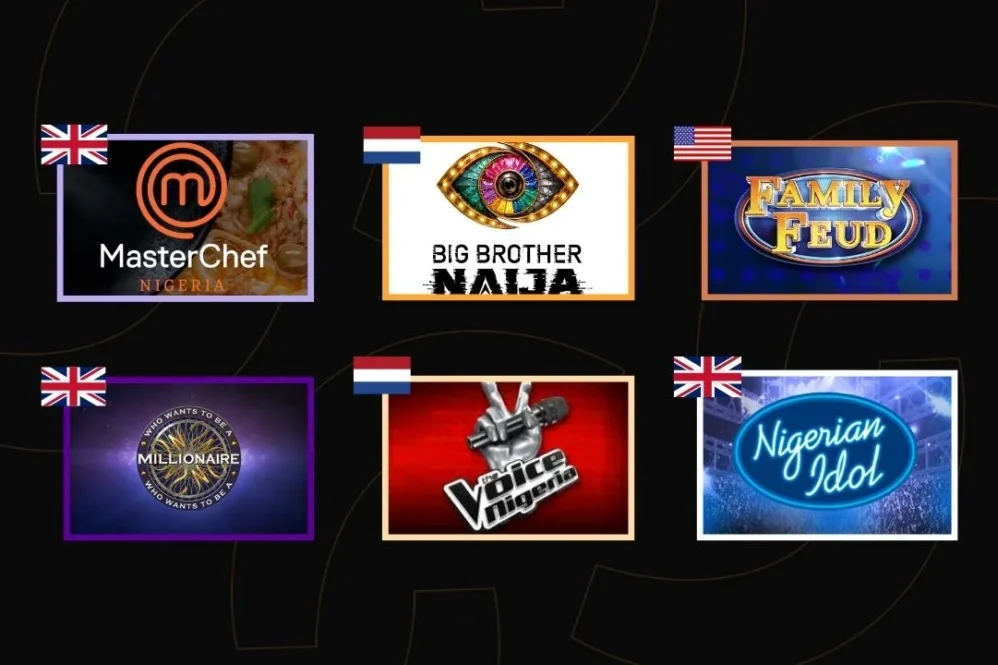
For the better part of two decades, Nigerian television has been significantly shaped by unscripted formats that originated abroad. Some became institutions. Others disappeared quietly. Most recently, MasterChef Nigeria concluded its debut season in mid-July, crowning 26-year-old Favour Bessan (known as Favy) as its first winner, while fans of the 11th edition of BBNaija voted Temi Nkem as its latest winner. This makes the conversation around the adaptations of these shows more relevant than ever. What actually happens when a global format meets a Nigerian audience, and why does it go the way it goes?
When a foreign company licenses out a format to a Nigerian company, it is selling the rights to use that format, which includes the rulebook, a tested structure, and a proven audience-engagement loop. The local producers fill that skeleton with their own talent, sponsors, and language. For Nigerian producers and broadcasters operating without mature advertising infrastructure or reliable viewership data, that proof of concept carried genuine appeal. Original programming is a gamble; a format is a calculated bet.
But there was a deeper cultural logic at work. Nigeria in the early 2000s was hungry for television that was aspirational, competitive, and interactive. Who Wants to Be a Millionaire, which Lagos-based Ultima Studios launched in 2004, placed an ordinary Nigerian in a chair, asked them to perform under pressure, and dangled a life-changing sum in front of a national audience. In a country where ten million naira could reshape a family’s circumstances entirely, that was not entertainment so much as collective dreaming. Music talent shows did something adjacent.They told viewers that the path from obscurity to the stage was shorter than they thought, and that the audience had a say in who travelled it. The formats that arrived first were almost all built around aspiration and public participation. That loop was the core product that would serve several other adapted shows.
So, knowing why Nigeria imported formats is the easier question. The more interesting one is how those formats stopped feeling imported once on our screens.
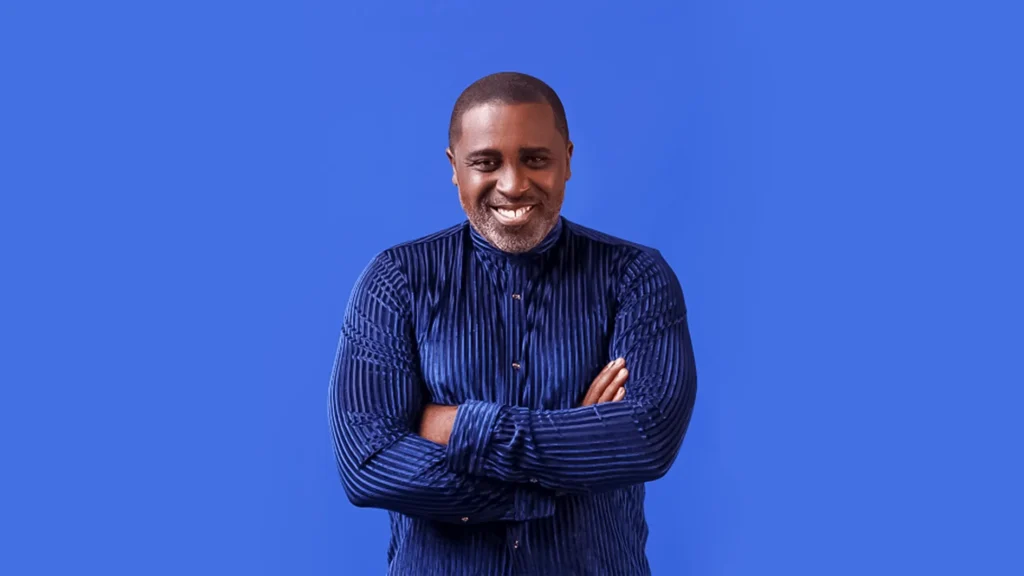
Frank Edoho and Who Wants to Be a Millionaire are the clearest illustrations. The British format gave Ultima Studios the clockwork: lifelines, an ascending prize ladder, the moment of decision crystallised in one question. What Edoho gave it was something no production bible could specify. He had spent years in radio building tension through the airwaves, including hosting a radio quiz show called Win a Million on Metro FM 97.6, which meant he arrived at the hot seat already knowing how to weaponise silence. He understood that the host’s job was to preside with a calm authority that made contestants sweat and viewers lean forward. When he left in 2017 following a contractual dispute with Ultima, Nigerians lost a Sunday-night ritual. That a Twitter poll during a BBNaija season, asking who was “the king of suspense” on Nigerian television, went decisively his way and prompted Ultima to abandon 76 host auditions and call him back says everything. The viewers were tuning in for Edoho as much as for co-aspiring with the potential Millionaire.
If Edoho showed what the right host could do to a format’s emotional register, Project Fame showed what the right cultural framework could do to a format’s internal logic.
Project Fame West Africa, also produced by Ultima and sponsored by MTN from 2008, made a different kind of cultural translation. The format, based on a French residential academy concept, structured contestants’ lives around coaching, rehearsal, and weekly performance assessed by faculty. In Nigeria, that structure hit with force because it reflected something already present in the culture: raw talent without rigorous formation is incomplete; craft is taught and earned. The show’s music director Ben Ogbeiwi became a figure of near-legendary severity whose approval contestants coveted and whose disapproval they feared. That dynamic, the demanding elder who refuses to accept mediocrity, needed no translation. The format did not impose a foreign pedagogy on Nigerian contestants. It gave existing Nigerian values about discipline and mastery a stage and a camera. The alumni it produced, Iyanya, Chidinma, Praiz, spoke (or should we say sang) for themselves.
Britain’s Nigerian Idol, commissioned and broadcast by MultiChoice through Africa Magic, surfaces something different again: what Nigerian audiences are actually voting for. Voting patterns on Nigerian reality shows consistently show that viewers mobilise behind contestants with underdog narratives, those whose victory feels like a proxy for the audience’s own possibilities. Beyond sentiment, it is a coherent value system expressed through a phone vote. It meant that the most technically gifted contestant on Nigerian Idol did not automatically win, and producers learned across multiple seasons to cast for story as much as for voice. The audience knew that they were co-authoring the narrative.
Who Wants to Be a Millionaire, Project Fame, and Nigerian Idol illustrate three different registers of localisation: the host who becomes the format, the pedagogy that mirrors a cultural value, and the audience that rewrites the competition’s meaning from the outside.
Family Feud Nigeria, hosted by Bisola Aiyeola and produced by Ultima with a 5 million naira prize per winning episode, adds a fourth. The format (with MTN as lead sponsor) asks “families” to match survey answers about everyday life, adapted from the popularized US format. In Nigeria, the gap between what families (both real and found families) assume about each other and what they actually think opens wider and in funnier directions, because Nigerian family structures carry more overlapping obligations and more cross-generational friction. The moment an uncle confidently gives a spectacular wrong answer, the embarrassment radiates outward through the whole family unit. The humour translates because the social design around it is richer. Bisola’s instinct as host, to lean into the chaos rather than smooth it over, suits the format perfectly.
All of these, Frank’s poker face, Ben Ogbeiwi’s severity, the underdog voter, Bisola’s gleeful chaos- are acts of translation working quietly within the format’s existing walls. BBNaija knocked the walls down entirely.
BBNaija is where localisation reached its fullest ambition. The 2006 original was produced by Endemol Nigeria, a local subsidiary incorporated by Obi Asika of Storm 360 in partnership with Endemol South Africa and M-Net. The eviction parties, weekly live events featuring Nigerian music acts, were Asika’s innovation and existed in no other Big Brother franchise. When the show returned in 2017, now under MultiChoice’s ownership and produced with South Africa’s Red Pepper Pictures, those parties remained, by then an established part of what the format meant in Nigeria. More profoundly, Nigerian viewers had given BBNaija a moral framework the Dutch format never anticipated: voting patterns consistently favour housemates whose victory feels communally meaningful. The format provided a house and a rulebook. Nigerian viewers gave it a soul.
It would take another sixteen years after the original BBNaija before a Nigerian production company looked at a foreign format and made a comparable claim on it, not by adding to what was already there, but by insisting that the city itself was the show.
Although not a competition format, The Real Housewives of Lagos, produced by Livespot360 for Showmax from 2022, is the most recent significant example. Run by Deola Art Alade and Darey Art-Alade, Livespot360 deliberately infused indigenous and lifestyle elements and cast its Lagos socialite housewives with the city’s specific social hierarchies in mind. The NBCUniversal format had already been adapted across fifteen other territories. What Livespot360 understood was that Lagos is a character in itself, and the show would only be appealing if it was based in Lekki and Victoria Island culture and lifestyles instead of being a blatant imitation of Atlanta or New York culture and lifestyle. The show ran for three seasons, moving from Showmax to Africa Magic after Showmax’s closure (and migration to DStv Stream).
The Lagos success was enough to pull the franchise North almost immediately. The Real Housewives of Abuja, produced by Delmwa Deshi-Kura’s Delmedia Productions and premiering on Showmax in February 2023, marked the eighth version of the format in Africa and the second in Nigeria within a year. It followed the flamboyant lifestyles, social relations, and individual stories of six influential women in the city known for its wealth and power.
Abuja offered something different from Lagos’ social volatility and noise. The capital city is organised around proximity to power, and more deliberate connections. There, the stakes of a public falling-out are higher. The show ran for one season of ten episodes before being cancelled in August 2024.
The success of the shows above can make format adaptation look deceptively straightforward. It is not. For every BBNaija, there is a show that arrived with similar ambition and left without much ceremony, and the reasons are instructive.
The Voice Nigeria ran for four seasons from 2016, initially produced by M-Net in partnership with Talpa Media, then from Season 3 by Nigerian companies UN1TY Limited and Livespot360, who brought production onshore for the first time. It never displaced Nigerian Idol. The reason is structural. By 2016, Nigerian Idol had spent nearly a decade building a specific emotional contract with Nigerian viewers. It had produced the alumni, generated the arguments, and trained the audience in its particular rhythms of elimination and redemption. The Voice arrived with a technically superior format hook in the blind auditions, but it was asking viewers to start that process over with a new show, and there was no compelling reason to do so. The specific Nigerian market that already has a show it loves does not easily adopt a duplicate, however good.
Nigeria’s Got Talent is the sharper lesson. Launched in 2012 on AIT and NTA and sponsored by Airtel, it was well-suited to the range of Nigerian talent. But smartphone penetration was still limited, social media had not yet become television’s amplification layer, and when Airtel stepped back, nothing structurally replaced it. The 2006 Big Brother Nigeria failed for essentially the same reason before returning in 2017 to enormous success. Almost nothing about the format changed. What changed was the country around it: internet penetration, affordable decoders, and a generation trained by online culture to live inside ongoing public conversations. Quality is necessary but not sufficient. A format needs the infrastructure conditions its engagement model depends on, and in Nigeria in 2012, those conditions were not yet in place.
Behind every successful adaptation sits a financial arrangement that matters more than the format itself. Title sponsorship by a single corporate backer works brilliantly until that backer’s strategic interest shifts. When MTN withdrew after nine seasons of Project Fame, the show ceased to exist regardless of audience loyalty. MultiChoice’s subscription model has proved more durable because compelling BBNaija content is simultaneously a reason to maintain a DStv subscription. The show feeds the platform and the platform protects the show.
Canal+‘s acquisition of MultiChoice has introduced new caution into this environment. The company has signalled a more conservative approach, and the closure of Showmax removed one of the few platforms willing to take creative risks with format adaptations like Real Housewives of Lagos.
The budget environment for new format launches is more constrained than it has been in a decade, due to the country’s economic instability. At the same time, we can still make guesses about foreign shows that could potentially work on the Nigerian screen in the coming years.
Cooking formats beyond MasterChef have obvious room. They’ve worked in various local formats before, such as Sokoyokoto, the forerunner to television cooking shows in the country, jointly sponsored by Maggie and Royco. It featured Nollywood and music stars cooking before a live studio audience, followed by a party segment. Knorr Taste Quest, Judged by celebrity chefs Dr Robert and Chef Fregz, with Chef Renée Chuks joining the panel for Season 2. Twelve contestants competed over thirteen weeks per season. An original Nigerian format rather than a licensed foreign one, but a direct precursor to the MasterChef model of structured culinary competition on television.
Street Foodz Naija (2019 onward, FoodBay TV/Maxima Media Group). Now in its sixth season, this is arguably the most sustained Nigerian cooking competition format before MasterChef arrived. Focused entirely on street food vendors rather than trained chefs, with a 10 naira million prize from Season 3 onward, hosted across various seasons by figures including VJ Adams and Enioluwa Adeoluwa, and judged in later seasons by Chef T and food critic Opeyemi Famakin, and backed by the Lagos State Government from Season 5.
These cooking shows demonstrate the Nigerian audience’s interest for culinary television, and a lower-budget format anchored in specific regional traditions could serve that appetite at a fraction of the production cost. The growing global commercial appetite for West African food makes this territory worth exploring seriously.
Dating formats carry the highest potential and the highest risk. A Love Island-model show would find a natural audience among the same demographic that made BBNaija a cultural institution, but the genre would require careful handling in a regulatory environment that has historically pushed back against BBNaija’s more intimate content.
Regardless, the more meaningful question, for the show and for every format that follows it, is whether what would be produced across several weeks would feel, to a Nigerian viewer, like it was made specifically for them. The format is only a door. What matters is who walks through it, and what they bring with them.
Become a patron: To support our in-depth and critical coverage—become a Patron today!
Track Upcoming Films: Keep track of upcoming films and TV shows on your Google calendar.