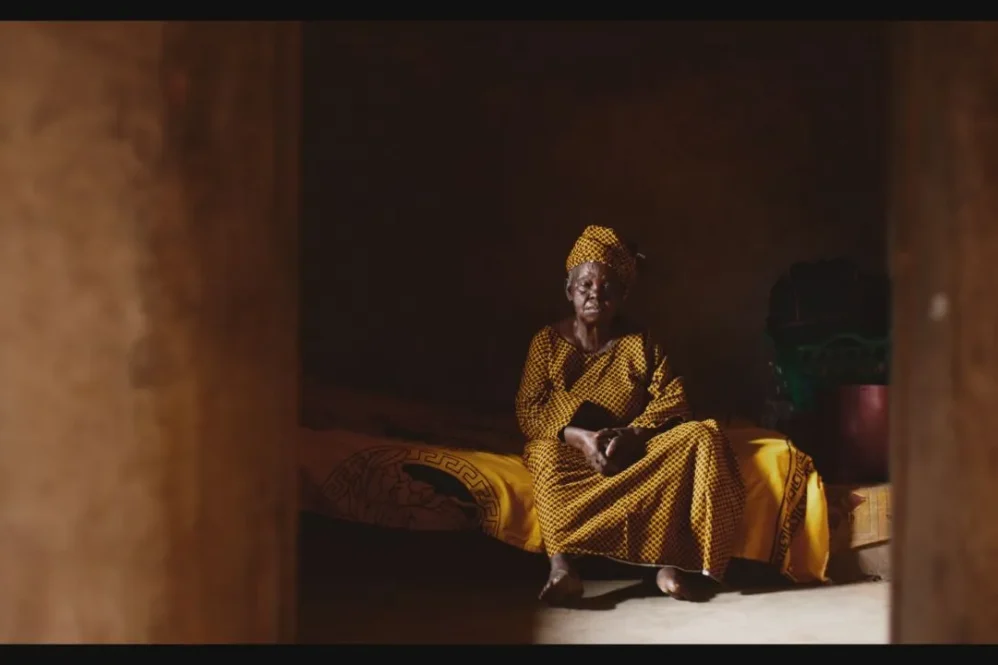
Stephanie Ohumu’s directorial debut, Mia Mia, is the first film to emerge from an ambitious, self-funded initiative to document and preserve the Edo language. The 27-minute documentary, which follows an octogenarian speaker confronting the disappearance of her language and its cultural traditions, is currently making its way through the international festival circuit.
The documentary forms part of the Edo Corpus, an ongoing project led by Ohumu to build a comprehensive digital dataset of the language through recorded conversations, ceremonial proceedings, folk songs and other forms of oral expression. The initiative aims to preserve not only the language itself but also the cultural knowledge passed down through generations of Edo speakers.
“The corpus is the main project,” Ohumu told What Kept Me Up, explaining that Mia Mia is the first of several media productions expected to emerge from its documentation efforts.
Set in modern-day Edo State, Mia Mia, an Edo expression meaning “to forget”, centres on Maria Evbagharu Osazee, an elderly speaker who reflects on the cultural changes she has witnessed throughout her lifetime. Her story emerged during the project’s first data collection exercise, which focused on the lived experiences of older Edo speakers.
According to Ohumu, Maria stood out for her ability to articulate the cultural loss she had witnessed, while offering a more personal account of grief, love and the relationship between traditional heritage and her Christian faith. Her home, with its traditional red earth walls, also provided a distinctive visual setting for the documentary.
The film explores what disappearing language traditions mean for the preservation of folktales, traditional medicine, recipes, proverbs and other forms of knowledge that may not have been extensively documented in writing.
“When a language dies, the culture it carries dies too,” Ohumu said. “If we cannot speak our language, if it exists nowhere in writing, and if truth increasingly means only what machines can read, we risk the complete erasure of a civilisation.”
While estimates cited by Ohumu place the Edo-speaking population between 1.6 million and three million, she argues that such figures offer an incomplete picture of the language’s condition, particularly because they do not distinguish between different levels of fluency. She identifies the declining ability to discuss complex historical and cultural subjects without relying heavily on English or Nigerian Pidgin as a particular concern.
Beyond fluency, Ohumu also points to the loss of knowledge surrounding traditional guilds, ceremonial beads, folklore and other cultural practices embedded in the language.
“Language is a knowledge repository. Very few people still have that repo for the Edo language,” she said.
To address this, the Edo Corpus is collecting speech from people over 60 whose first or only language is Edo, across urban and rural communities in the state. The recordings cover everyday conversations, ceremonies including burials and festivals, recipes and folk songs, with contributors participating through informed consent.
The material is being organised into a bilingual, machine-readable dataset containing Edo transcriptions alongside English translations. Each recording identifies individual speakers and their contributions, allowing researchers to trace expressions and their meanings within their original conversational or cultural contexts.
The project has so far transcribed and translated three hours of speech and songs, with a target of recording 50 hours of material by December 2026. Its longer-term ambition is to build a collection of 500 hours of transcribed and translated recordings.
Although the dataset could eventually support the creation of an updated Edo dictionary, building on earlier linguistic work by Rebecca Agheyisi and others, Ohumu says the project’s ambitions extend considerably further.
The corpus is intended to become available for licensing and research, while also supporting the development of public-facing products. Potential applications include language-learning tools and other digital resources that make the documented material accessible beyond academic or specialist audiences. The team is still refining how these products might be developed.
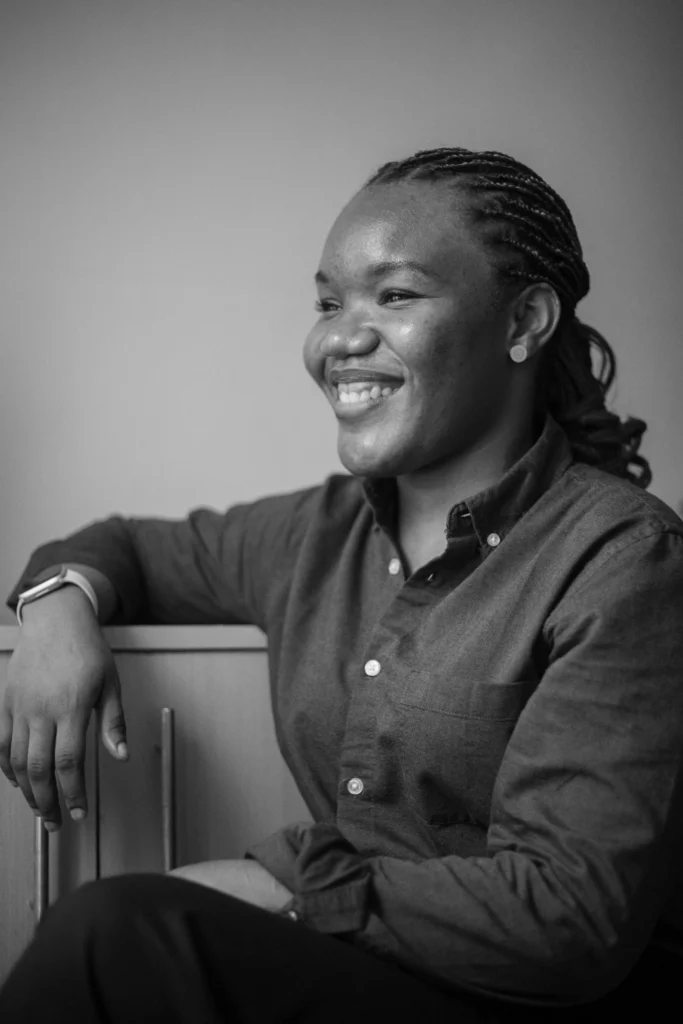
Ohumu’s background bridges documentary production and technology. Having grown up in Benin City, she later pursued a master’s degree in Artificial Intelligence and Data Science. She previously worked on Emmy-nominated BBC Africa Eye documentaries, including investigations that reached more than 12 million viewers and contributed to legislative changes across West Africa. She is also a recipient of The Future Awards Prize for Journalism.
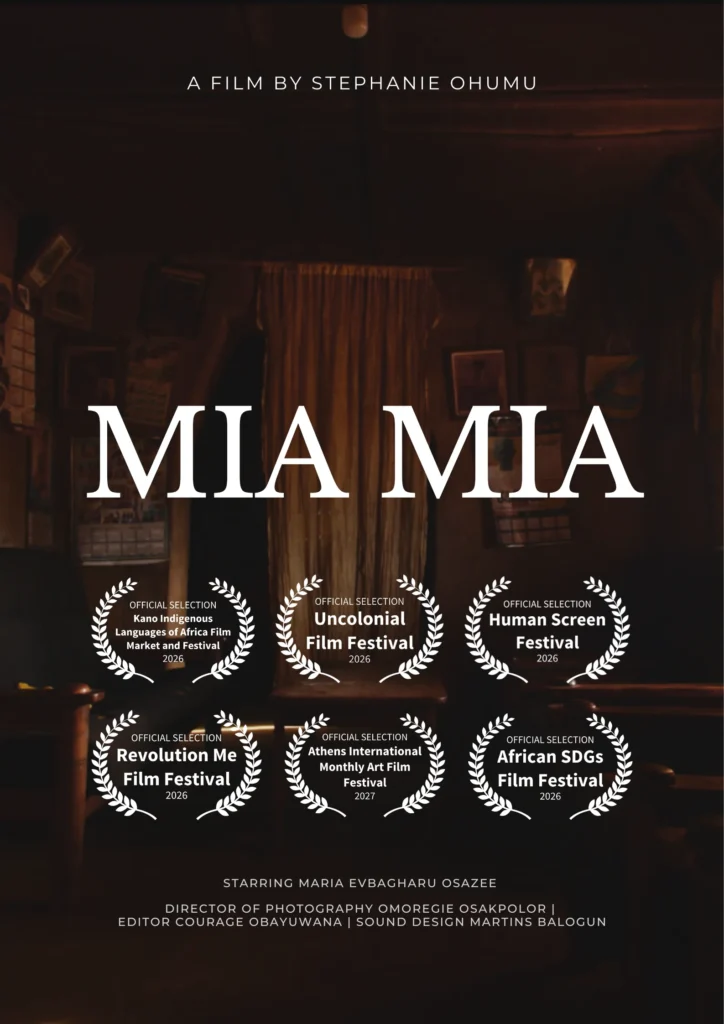
Mia Mia had its world premiere at the Uncolonial Film Festival in Germany in August 2026 and was subsequently programmed at the Human Screen Festival in Tunisia in November for its African premiere. The film is also set for its Nigerian premiere at the Kano Indigenous Languages of Africa Film Market and Festival later this month and has a North American premiere planned at Brooklyn’s Revolution Me Film Festival.
Other festival recognition includes a semi-finalist placement at the African SDG Film Festival and an honourable mention at the Athens Art Film Festival.
Produced by Ohumu and Omoregie Osakpolor, the documentary features cinematography by Osakpolor, editing by Courage Obayuwana and sound design by Martins Balogun.
As the documentary continues its festival run, work on the Edo Corpus remains ongoing, with Mia Mia establishing the first film component of a wider project seeking to preserve the language through both recorded knowledge and its creative applications.
Become a patron: To support our in-depth and critical coverage—become a Patron today!
Track Upcoming Films: Keep track of upcoming films and TV shows on your Google calendar.