A recurring question in discussions about Nollywood’s film training model is what happens after the training. Where do emerging filmmakers go next, and how do they put what they have learned into practice?
To address this gap, 93 Days director Steve Gukas and Living in Bondage: Breaking Free producer Dotun Olakunri founded the First Features Project, building on an existing collaboration between their respective production companies, Natives FilmWorks and Michelangelo Productions.

The timing was hardly ideal. When First Features was announced in November 2020, COVID-19 had disrupted the film industry. Cinemas were closed, productions had stalled and the prospect of a return to normal remained uncertain. Nevertheless, plans to train and support a new generation of Nigerian filmmakers were moving forward.
“We didn’t think that COVID was going to take longer than a month or two, and everybody would be back to work,” Steve Gukas, who is also credited as one of the initiative’s executive producers, tells What Kept Me Up.
The Plan
Before the lockdown, the team had assembled a network of state-owned television stations across Nigeria and signed agreements for the First Features slate to be distributed across them. The original plan was to produce 12 made-for-TV films, using each production as a practical training ground for an emerging director before releasing the completed films on television and eventually YouTube.
“The idea was we put out one every month, and it does the TV run, and then you go from the TV run to a YouTube run,” Gukas reveals.
But planning the films remotely was one thing; making them was another. With the pandemic still disrupting physical gatherings, it remained unclear when participants could begin the collaborative work at the heart of First Features: developing stories alongside writers and facilitators before gaining experience on professional film sets.
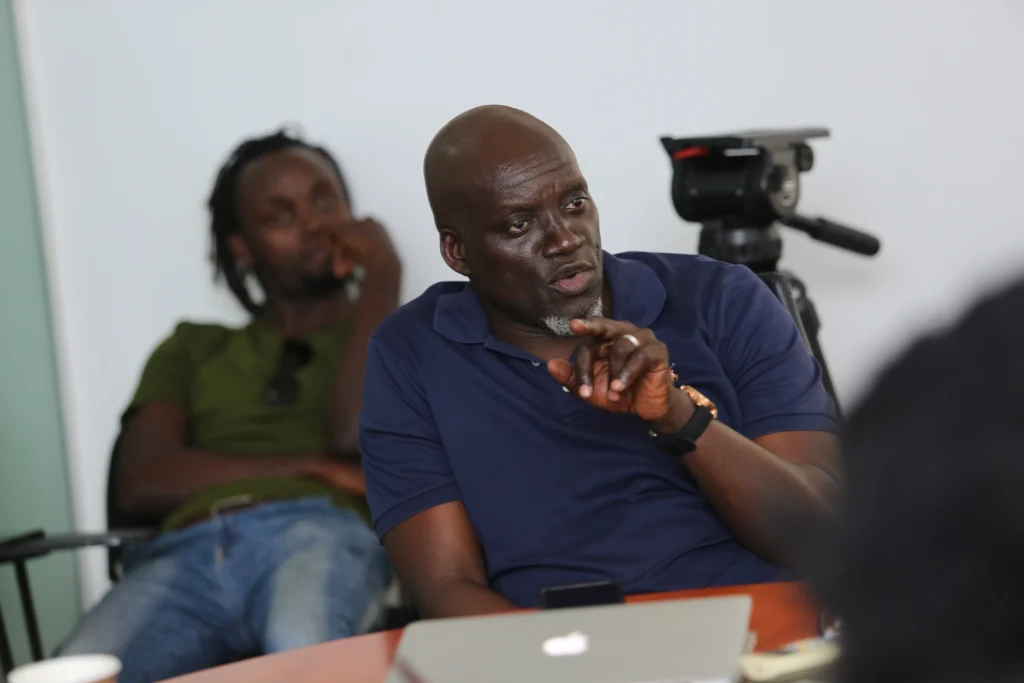
That emphasis on hands-on learning reflected Gukas’ own experience. Having trained at the London Film School and spent years working in the industry, he had become concerned about the gap between aspiring filmmakers identifying as directors and understanding what the job actually required.
“I see work that is being done by directors. I have conversations with people who say they are directors, and 80% of those people don’t even know the first thing about what a director does,” he says.
That concern shaped the programme’s approach to training. The two-week boot camp took place in Abuja in 2021, offering what Gukas describes as a condensed version of film school. Development work between the writers and directors then continued across 2021 and 2022, followed by ongoing director treatments and pre-visualisation as the individual projects moved towards production.
Call for Application
Getting to that stage began with finding the right filmmakers. When the call for directors eventually opened, applicants had to meet one deliberate requirement of having a short film in the bag. More than 1,000 submissions came in.
Then, the interviews explored the applicants’ motivations, influences and understanding of storytelling. During Reuben Reng’s interview, for example, the team asked questions ranging from the films he admired to what drew him to filmmaking. “What makes you a filmmaker? What makes you want to tell stories?” The aim, as Gukas puts it, was to find people who “had exerted themselves to do something”.
The next open call made an important distinction. First Features invited stories rather than completed scripts. “The idea of separating the directors and the stories, and to also call for stories, not scripts, was that we wanted to get stories from just about anybody,” Gukas says.
There were no restrictions on genre, although the stories had to be family-friendly. Beyond that, the team wanted filmmakers who understood storytelling as more than simply putting images on screen: their work had to have something meaningful to say.
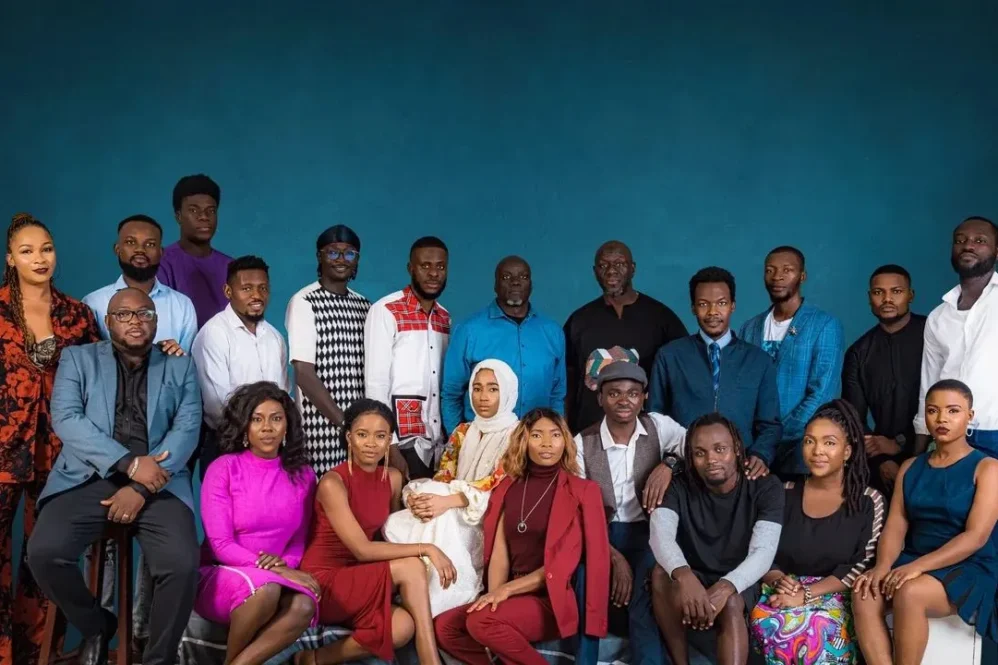
Among the filmmakers selected for First Features were Reuben Reng (Love & Life, Katangari Goes to Town), Prosper Edesiri (Cake, The Anniversary), Korede Azeez (It Blooms in June), Courage Obayuwana (Kill Boro), Sebastian Ukwa (A Father’s Love, A Danfo Christmas), Seun Richards (At Ease), Wingonia Ikpi (The Lost Days), Toluwani Obayan (Colour Me True), Jammal Ibrahim (The Almajiri), Binwana Gazuwa, Nifemi Ogunlola, and Kensiena Obue. The programme offered their first experience directing a feature-length production, although the journey from training to the film set unfolded differently for each.
Practical Experience Begins
It Blooms in June was the first of the First Features films to go into production, with Reuben Reng joining Azeez as an assistant director before going on to direct his own film, Love & Life. The process became a reminder of the fundamentals of filmmaking. “From pen to actualization, from pen to screen,” he says, the programme reinforced the importance of knowing a story deeply, from casting and script breakdown to the smallest details of production.
Azeez remembers the moment First Features became real for her. It was the “spin the wheel” call where the directors were assigned their stories. Even before the call ended, she had already started looking for the writer she would be paired with and began the conversation.
Before then, she had never attended film school, but the programme gave her an experience that felt like one. “I didn’t know what directors’ classes were like, but it felt like Uncle Steve and the team managed to pack a lot into that time frame,” she says, recalling the intensity of the two-week programme.
The directors had experienced filmmakers around them as they made that transition. On It Blooms in June, Azeez had Reng as her assistant director. Reng had some experience behind him, having been a mentee under Gukas since 2012, directed the short film Dilemma and the Africa Magic Original Film Na Yarda. He had also worked as first assistant director on Still Falling before joining First Features.
“Reuben was my rock throughout that production,” she says. She had prepared as much as she could, but the set taught her things that books could not. “You learn directing on sets,” she adds, confirming the importance of the practical aspect that the team brought into the learning process.
Azeez became more deliberate about working with her actors and cinematographers before production, with much of the groundwork happening during prep. “Most of what we’re going to do together, we’re going to do it in prep,” she says.
Across the slate, filming would eventually stretch from 2022 until November 2025, meaning the order in which the films were produced did not necessarily match the order in which they were released.
A New Twist and Challenges
Although the original plan was for 12 directors to make 12 films, not every filmmaker was able to eventually make it to set. Kensiena Obue, Nifemi Ogunlola and Binwana Gaza were no longer available when the projects moved closer to principal photography, mostly because of personal commitments. That gave Ukwa, Edesiri and Reng another opportunity to step behind the camera. This came with a different challenge of taking ownership of stories they had not developed themselves.
Reng came back for Katangari Goes to Town, and the story took him back to his hometown Jos, where he had wanted to work. He had conversations with the original filmmaker (Binwana Gazuwa), who had previously been attached to the project, but understood that the final interpretation had to be his.
“Essentially, at the end of the day, it was the director’s interpretation that would come into the story,” he says. Shooting in Jos gave that interpretation an added personal dimension. “I was so happy that I actually went to shoot in an actual village in Jos.”
Prosper Edesiri had a different kind of return. By the time he made The Anniversary (originally Nifemi Ogunlola’s project), four years had passed since Cake, and the difference in Gukas’ involvement became a measure of how much responsibility he could now carry. “It gave me a sense of how much I’d grown,” Edesiri reveals about how independent he was in the second feature. “You’re now a man of yourself.”
Experiencing a disconnect phase with the assigned stories wasn’t only peculiar to returning directors. Directors with one feature planned also had some difficulty making the stories their own.
Wingonia Ikpi and Courage Obayuwana both remember struggling to find their way into their initial assignments. The programme allowed them to speak up when a story did not feel right and, where necessary, consider another one. Ikpi would eventually reach a point where she found her connection to The Lost Days, shot across Abeokuta and sound stages in Lagos, following a woman (Ifeoma Fafunwa) who decides to confront her past by reconnecting with a former lover (Bimbo Manuel).
Financing
Once the directors had been matched with their stories, the next challenge was financing the films. First Features was putting substantial resources behind filmmakers who had demonstrated talent but, in most cases, had never worked at that scale. For Gukas, the uncertainty was part of the model. “The risk of first time directors, I would say, is the risk of inexperienced directors,” he says.
An initial 1 billion naira funding pool was set aside towards the wider First Features slate. According to the team, the financing came through Natives FilmWorks, Michelangelo Productions, a consortium of investors and, as the slate progressed, bridge financing from MBO Capital.
The original business model was built around recovering the investment through sponsorships and advertising tied to the planned television syndication. But attracting the expected commercial support proved more difficult than anticipated. “And so even though it sounded good, the investors were not sure how it was going to pan out,” Gukas recalls
With the original funding plan falling short of expectations, the team reconsidered how to finance and distribute the films. For the participating directors, however, navigating these financial realities also became part of the learning experience.
Courage Obayuwana, whose First Features project was the PH-set Kill Boro, acknowledges that financing a production at that scale would have been nearly impossible on his own. Beyond the funding itself, he valued the opportunity to understand the business behind filmmaking.
“Getting funding is something that we don’t teach in this industry, and to me that was one of the biggest assets, learning how to make our pitch deck, how to speak to investors, how to understand money business, how film business is being done.”
The programme also gave the filmmakers access to distribution arrangements that would have been difficult to secure independently. “Beyond financing, having people who give you distribution for your content on an executive level is a blessing that I think I wouldn’t have been able to do by myself,” Edesiri says.
Prime Video’s Entry
That distribution support eventually took shape through an agreement with Prime Video, giving First Features a platform for releasing its films.
The arrangement grew out of existing conversations between Amazon and Natives FilmWorks. When Amazon began meeting with Nigerian producers and directors after entering the market, Natives FilmWorks pitched a limited series that the company subsequently put into development. During those discussions, Gukas also introduced First Features. “I told them about the First Features idea and they liked it.”
What began as an introduction eventually became a formal arrangement, with Amazon coming on board and assigning each film a scheduled Prime Video release date. The agreement also permitted cinema releases and airline distribution, although the streaming schedule created a practical constraint. Completed films had to be submitted to Amazon approximately a month before their release dates for quality control and delivery, leaving a narrow window for theatrical screenings.
Cake was the only film to make it to cinemas before its Prime Video release. For the other productions, the timing proved difficult. “When Cake went to cinemas, Love & Life was still in post-production, but by the time it was finished, it was already due to go to Prime Video,” Gukas recalls.
The subsequent films faced similar scheduling constraints, leaving Cake as the exception rather than the beginning of a wider theatrical rollout.
While the arrangement secured a streaming home for the films, that availability was not indefinite. Some titles are now approaching the end of their Prime Video agreements. The First Features team declined to identify the affected titles or discuss possible renewals and subsequent distribution plans, citing the contractual nature of the agreements.
MBO Capital Steps In
The Prime Video agreement also changed the financial demands of First Features. With the films now being developed for a major streaming platform, production budgets increased beyond what the team could cover on its own.
“MBO came in pretty much right after Amazon came on board because the budgets moved and it was very clear to us that we didn’t have the kind of money to make films at a certain scale and scope,” Gukas notes.
MBO Capital joined the project after the third film, providing financing from the fourth production through the remainder of the slate. The Nigerian investment firm, incorporated in 2012, was no stranger to Nollywood. It began investing in film in 2017 with a three-film slate from Inkblot comprising The Wedding Party 2, Moms at War and New Money.
Its investments have since expanded to productions from several Nigerian companies, including Brotherhood, Gangs of Lagos and Nemsia Studios’ 12-title Prime Video slate. More recently, MBO backed Asurf Films’ 3 Cold Dishes and co-financed Arie and Chuko Esiri’s Clarissa.
For First Features, MBO provided what Gukas describes as bridge financing. In practical terms, this meant advancing funds needed to keep production moving against payments expected from Amazon. Rather than having to wait for those payments before financing the next stage of production, the team could access funds upfront, with the financing to be recovered from the incoming revenue. As payments began arriving from Amazon, the amount the production needed to draw down from MBO gradually decreased.
By the end of the slate, Gukas says MBO Capital had put “in excess of $1 million” into First Features, helping the team complete the films at the scale the Prime Video agreement had made necessary.
What Comes After First Features
For Gukas, the success of First Features extends beyond the films produced under the initiative. Each director who completed a project gained a feature-film credit and the experience of working on a production at a scale that might otherwise have been difficult to access. “Each of the directors is a success story,” he says.
The programme gave the filmmakers an opportunity to make films “at a scale that they wouldn’t have dreamed their first film would be”, while their releases on Prime Video provided access to an established streaming platform and its audience. What they have done with that experience since then offers another way to assess the programme’s impact.
Gukas points to Akorede Azeez’s progression from It Blooms in June to With Difficulty Comes Ease (co-produced by Azeez’s Cardinal, and Nemsia) as an example of the development that continued practice and support can produce. Azeez says It Blooms in June also formed part of the body of work she presented when applying for the Netflix-UNESCO Halima’s Choice. She is now turning more of her attention towards producing. “I think we need more creative producers,” she says, identifying a gap in the industry and an opportunity to support other filmmakers. Among her forthcoming projects is Daddy Bear, a faith-based family drama she co-directed with Hajarat Alli.
Other directors have taken different paths. Reuben Reng is considering a PhD after film school, while Courage Obayuwana has continued moving between directing and cinematography. Since Kill Boro, he directed two seasons of Street Food Naija and served as cinematographer on Jide ‘JBlaze’ Oyegbile and Ese Ariremu’s Idia. He is currently developing new projects and in funding stage.
Prosper Edesiri, meanwhile, has ventured into the growing vertical series space, with projects including Billion Naira Bride, which has surpassed 80 million views on TikTok.
For Sebastian Ukwa, the journey has also extended into film education and exhibition. Through his production company, Breadfruit Studios, he runs a YouTube channel offering filmmaking tutorials to more than 46,000 subscribers worldwide. He is also preparing for the fifth edition of the Fountain International Film Festival, the faith-based festival he founded in 2022, scheduled for December. Alongside these activities, Ukwa plans to begin production in November on A Life for a Life, a faith-based feature he wrote and will direct, drawn from one of four scripts he has developed.
Wingonia Ikpi continues in film through her company Boxonia Blueprint. Ikpi is credited as producer and casting director on Chee Keong Cheung’s action film, Son of the Soil as well as Anu Bamidele’s short film NollyBabes. Both films were screened at the 2025 and 2026 AFRIFF respectively.
Seun Richards has since directed the UK-set First Winter, now in final post-production, and co-founded The RAFI Collective. Through it, he is launching the Raise A Filmmaker Initiative in December to give aspiring filmmakers hands-on set experience and industry access. He is also developing the collective’s first feature, In the Mist, a Nigerian family drama currently in development.
Toluwani Obayan has returned to Nigeria after several years in the UK and is developing a new body of work rooted more closely in home. She has a deeply personal project in the works as director-producer, while beginning a second story set in the same universe. Both projects are interested in interiority and the gap between how people appear and what they are experiencing internally.
While the directors continue building their individual careers, First Features itself is preparing for another chapter. With the Nigerian slate complete, Natives Filmworks and Michelangelo Productions are taking the initiative to St. Kitts and Nevis through a partnership with the country’s government and Aquarian Consult. The expansion forms part of a wider Global Africa framework, with plans to adapt the programme beyond its original Nigerian setting. The timeline remains under wraps.
For Gukas, this next phase also raises questions about how to balance the initiative’s future with his own filmmaking ambitions. “We’re working out how that would work so that I’m free to tell the stories I want to tell,” he says. “I’m not getting any younger and there’s plenty of stories I want to tell.”
First Features has given a group of directors the opportunity to make a feature film with professional backing and a distribution plan already in place. What follows for those filmmakers will be an equally important test of the initiative’s impact.
Become a patron: To support our in-depth and critical coverage—become a Patron today!
Track Upcoming Films: Keep track of upcoming films and TV shows on your Google calendar.