I am plugged in to My Father’s Shadow Soundtrack, 2026 AMVCA Best Score winner, as I scribble down my experience after a private screening of the film with members of the Kuti family ahead of its two-week return to Lagos, Ibadan, Benin City and Akure from June 5. It only seems right that I’m immersed in the album after my fourth and brand-new experience of the acclaimed film.
In commemoration of the upcoming June 12 Democracy Day, Fatherland hosted some members of the Ransome-Kuti Family for a private screening of My Father’s Shadow, a gathering that felt especially significant given the family’s place in Nigeria’s political and cultural history. Whether through music, activism or public resistance, the Kuti family has been associated with conversations about democracy, state power and civic responsibility, most notably through the work of Fela Kuti. Being a vocal critic of successive governments made him one of the country’s most influential and controversial public figures. It is a history that closely mirrors many of the questions raised by Akinola Davies Jr.’s My Father’s Shadow.
(Click to Follow the What Kept Me Up channel on WhatsApp)
Unsurprisingly, the discussion that followed revealed the same thoughts that audiences have had about the film since its premiere: some saw a story about Nigeria and its political cycles, while others connected more deeply with its reflections on family, grief, memory and the ways the past continues to live in the present. The evening became a meeting point for resurfaced interpretations as overlapping ways of understanding the same story.
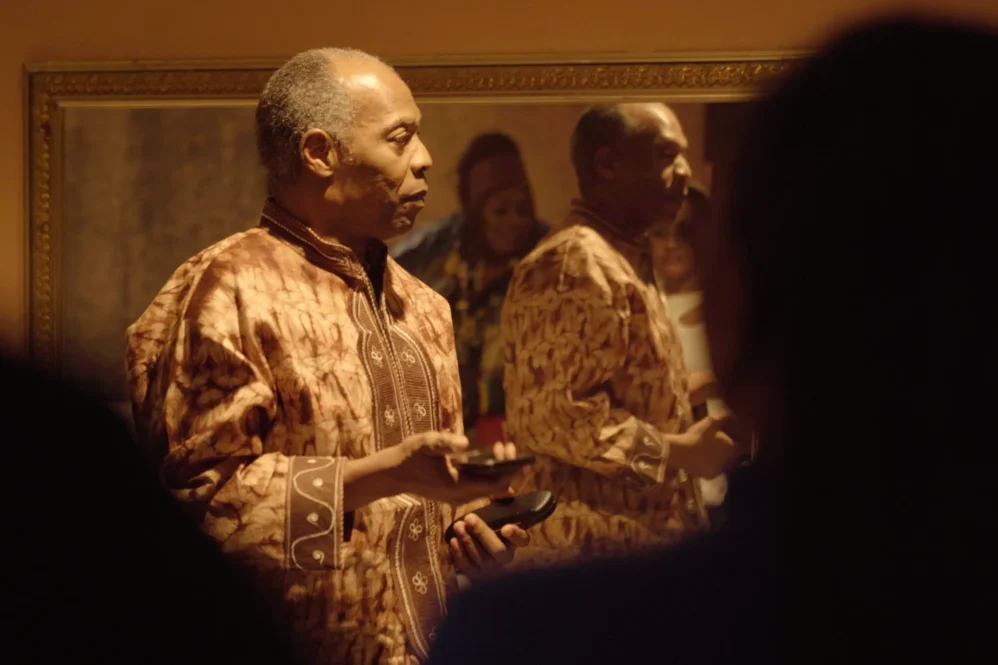
If there was one person determined to connect the film’s past to Nigeria’s present, it was Femi Kuti, the eldest son of the Kuti family.
One of the most ‘animated’ voices in the room, he spoke about periods in Nigeria’s history that many younger Nigerians only know through books, newspaper archives or stories passed down by older generations. His comments, based on memory, pointed to something viewers have noted about the film. Throughout the discussion, he shared his own interpretation of different moments in the story. His interpretations moved beyond the film itself and into wider discussions about Nigeria, democracy and the feeling that many of the country’s struggles have remained the same across generations.
“For me, it brings back so many possibilities of how Nigeria should be great. It brings back so many memories of that period, before that period, where we are now in Nigeria…how we keep trying to be great”, Femi Kuti said.
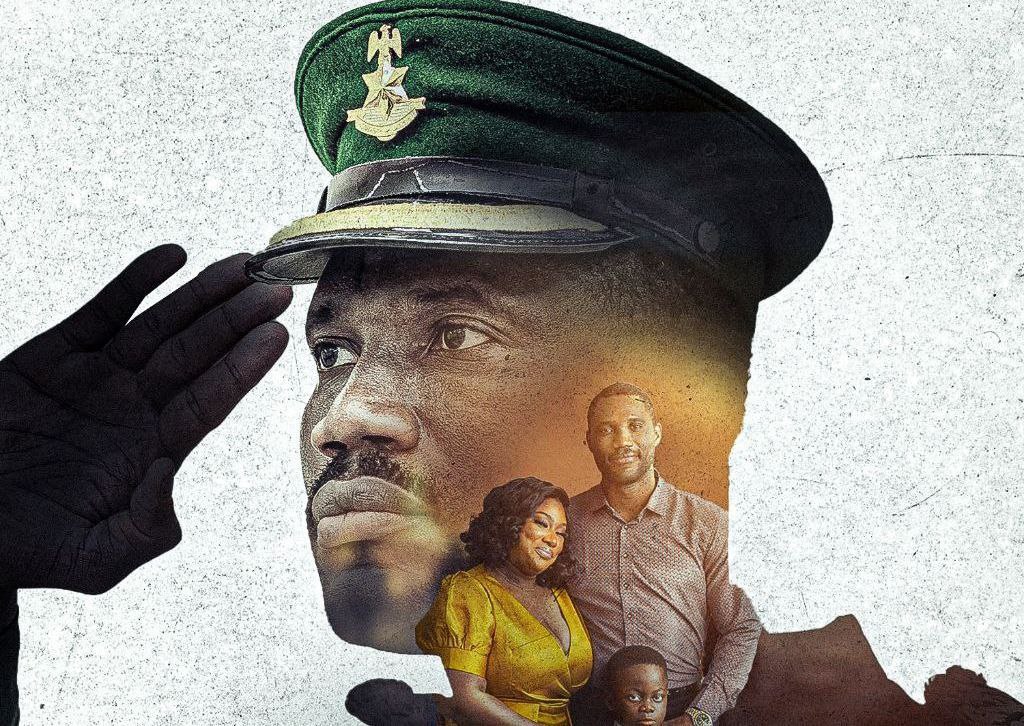
My Father’s Shadow follows two young brothers as they spend a day with their estranged father in Lagos against the backdrop of the June 12, 1993 election crisis and the unrest that followed.
The political events around the characters are not simply background. They actively have an impact on relationships, responsibilities and the futures available to ordinary people.
Even as the conversation returned to democracy, civic responsibility and Nigeria’s recurring struggles, nobody spoke about politics in isolation. The discussion repeatedly came back to family, collective remembrance and the things passed from one generation to another. Not just ideals or disappointments, but memories.
That led naturally into another point that has followed the film among audiences: the question of unfinished business.
One of the evening’s most engaging exchanges centred on the idea of Akúdáyàá, a concept in Yoruba mythology often associated with someone who dies but returns, or whose presence continues because something remains unresolved, and the interpretation that Fola carries that quality within the story. It is an interpretation that has appeared in different forms among audiences, particularly those trying to make sense of the film’s lingering emotional pull.
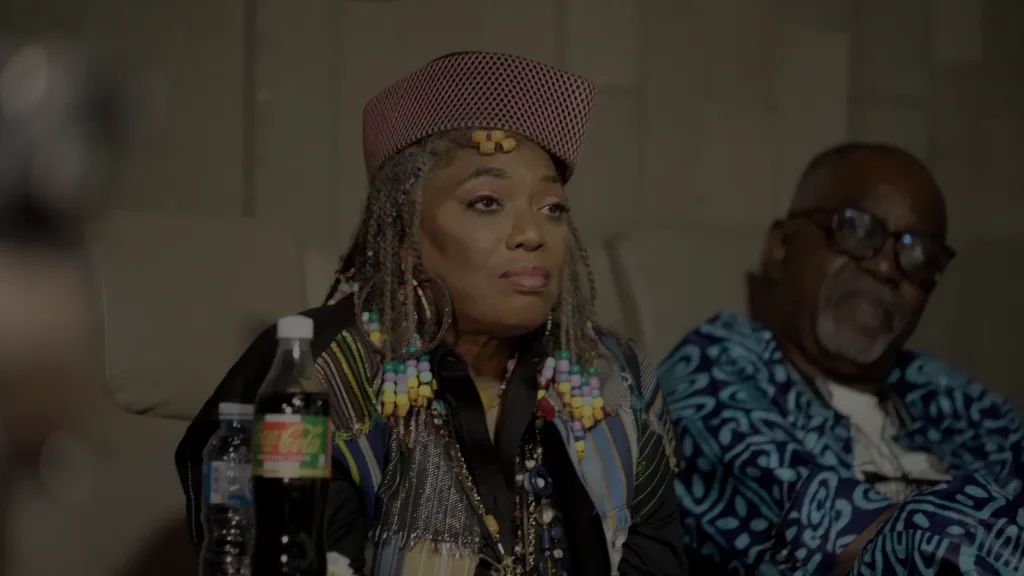
Others in the room were less convinced. Mádé Kuti questioned whether the film ever clearly establishes that Fola is dead in the first place. “It’s not clear how he was dead,” he said, pushing back against a reading that members had taken as a given. Before he could finish his thought, Femi Kuti jumped in. “The explanation was very…” Femi began, trailing off as Yeni Kuti cut him off. In familiar cinephile fashion, a healthy back and forth within the clan takes place.
Different interpretations bounced across the room, with Femi and Mádé Kuti on opposite ends of the interaction, others seeing memory, grief. Wale Davies and producer Funmbi Ogunbanwo listened as theories were made, sharing insights into the film’s making and occasionally giving insights while carefully avoiding definitive answers.
Later, Mádé shared a personal story about meeting his grandmother in a dream (Femi disagrees it was a dream, believing she actually held him), connecting his own experience to the themes presented in My Father’s Shadow and how people continue to carry those who are no longer physically present. As if a light switch went off, Mádé clapped in realisation of the word he had been searching for to describe the nostalgia in the film, “bittersweet, that’s the word I’m looking for.”
My Father’s Shadow is filled with nostalgia that really never settled as the past.
Yeni Kuti, daughter of Fela Kuti, recalled where she was during the unrest that followed the annulment of the June 12 presidential election, fondly remembering how she was out to get food when a riot broke out and it was a struggle to get back home.
The night wrapped with a presentation of a vinyl copy of My Father’s Shadow Soundtrack album by Funmbi Ogunbanwo to Femi Kuti.
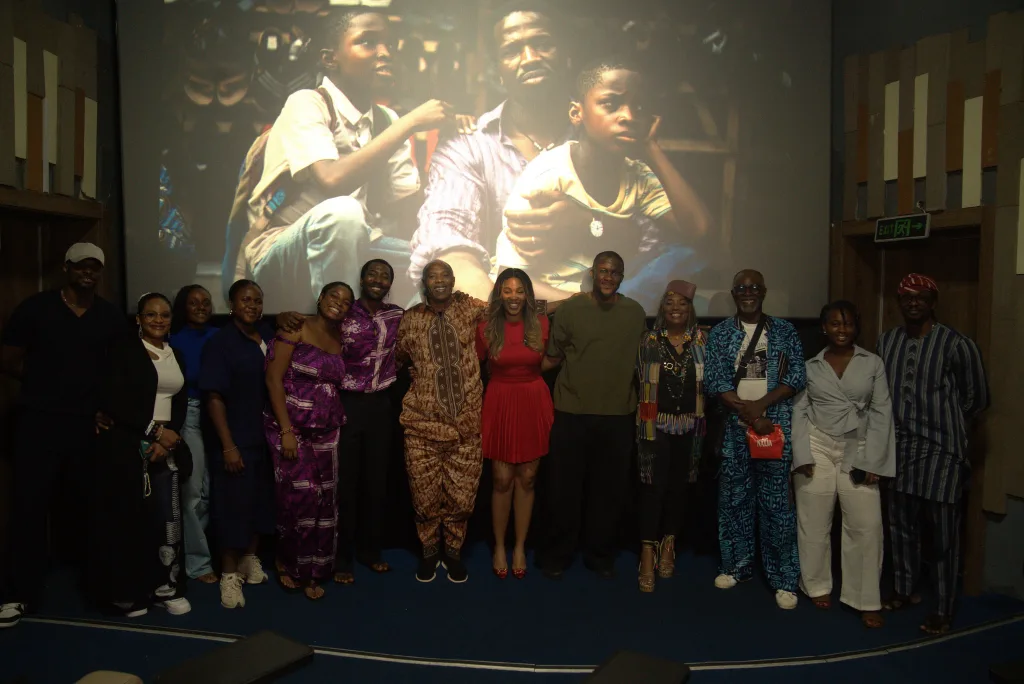
In attendance were My Father’s Shadow writer Wale Davies and producer Funmbi Ogunbanwo for Fatherland; Femi Kuti, Yeni Kuti and Theo Lawson (her partner), Mádé Kuti and Adanne Kuti for the Kuti Family and a few invited guests.
The private special screening was part of a series of events organised by Fatherland around the film’s ongoing two-week rerelease in cinemas.
Other activities have included a director’s screening at EbonyLife Cinemas, as well as a special gathering with young creatives.
Become a patron: To support our in-depth and critical coverage—become a Patron today!
Join the conversation: Share your thoughts in the comments section or on our social media accounts.