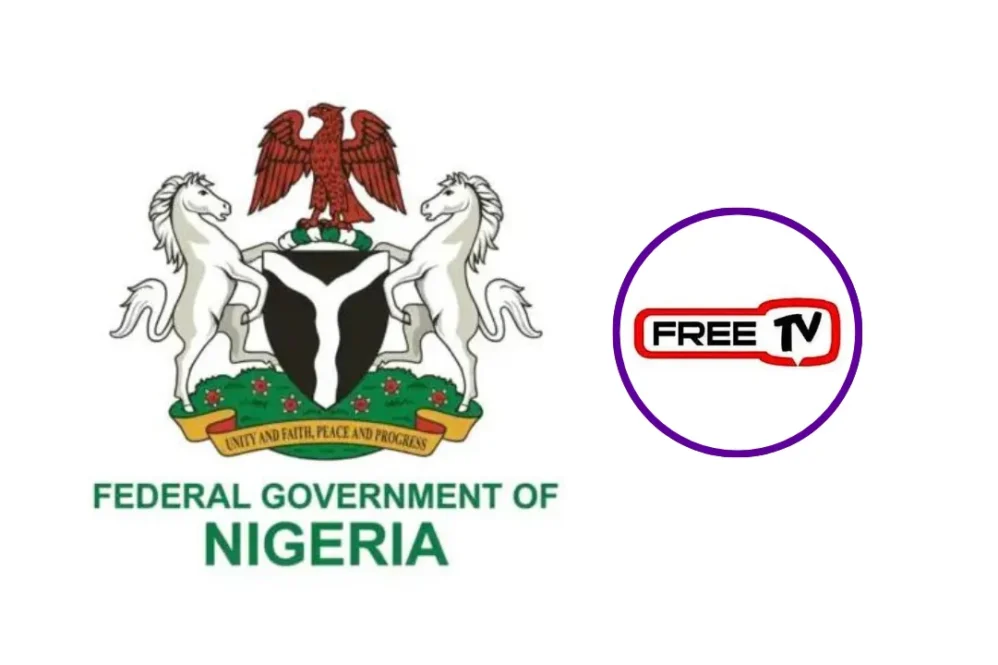
The Federal Government of Nigeria has announced plans to launch a nationwide free-to-air digital television platform, offering Nigerians access to more than 100 television channels at no subscription cost. The initiative, part of the country’s long-delayed Digital Switchover (DSO) programme, was scheduled for official launch on June 17, 2026.
Designed as a hybrid of satellite and terrestrial broadcasting with an additional mobile application component intended to extend access beyond traditional television sets, the platform will launch with over 100 yet-to-be-disclosed channels covering news, sports, education, entertainment, and children’s programming, with content available in multiple Nigerian languages. The hybrid system will allow for wider national coverage, including rural areas that have been underserved by traditional broadcast infrastructure.
A key feature of the new platform is that it will be free-to-air, meaning viewers will not be required to pay monthly subscription fees to access channels. However, access will still depend on compatibility with digital broadcasting technology, meaning households may require DVB-T2 or DVB-S2 decoders to receive signals on existing television sets.
FreeTV is said to support expansion in Nigeria’s media production sector by establishing regional production hubs in multiple cities, including Lagos, Abuja, Port Harcourt, Enugu, Kano, and Benin. These hubs are expected to generate employment opportunities across production, editing, broadcasting, and technical support roles, while also decentralising content creation beyond major industry centres.
Nigeria’s final phase of analogue switch-off remains scheduled for December 31, 2028, after which all television broadcasting is expected to operate fully on digital systems.
Ahead of the rollout, authorities are encouraging households to begin preparing for the transition by confirming decoder compatibility and exploring access through the FreeTV mobile application.
Households without compatible FreeTV equipment can get decoders through accredited dealers in Plateau, Kwara, Kaduna, Enugu, Osun, Lagos, Kano and FCT, before completing registration for activation. The platform also allows users to renew their Digital Access Fee through USSD and other payment channels. While FreeTV does not charge monthly subscription fees, users are required to pay a yearly Digital Access Fee of 1,500 naira to maintain access to the service.
Alongside Nigeria’s FreeTV rollout, similar but structurally distinct government-backed interventions are emerging across other African creative industries. In Eswatini, the Eswatini Copyright and Neighbouring Rights Society (ESWACOS) has launched applications for its Creative Industries Development Fund, offering small grants to creators for production, promotion, and related work. In Togo, the Ministry of Tourism, Culture, and Arts has begun work on establishing FoNSICA, a national film and audiovisual support fund.
Become a patron: To support our in-depth and critical coverage—become a Patron today!
Join the conversation: Share your thoughts in the comments section or on our social media accounts.
Track Upcoming Films: Keep track of upcoming films and TV shows on your Google calendar.