

Dika Ofoma’s A Quiet Monday is a social drama about the illegal IPOB (Independent People of Biafra) sit-at-home mandate in Southeastern Nigeria. After the federal government locked Nnamdi Kanu up on secessionist charges, his followers mandated Monday sit-at-homes across the Southeast in protest. Not everyone in the Southeast belongs to or agrees with IPOB. However, they continue to suffer. A Quiet Monday is about the human consequences of that sweeping Monday stay-at-home mandate.
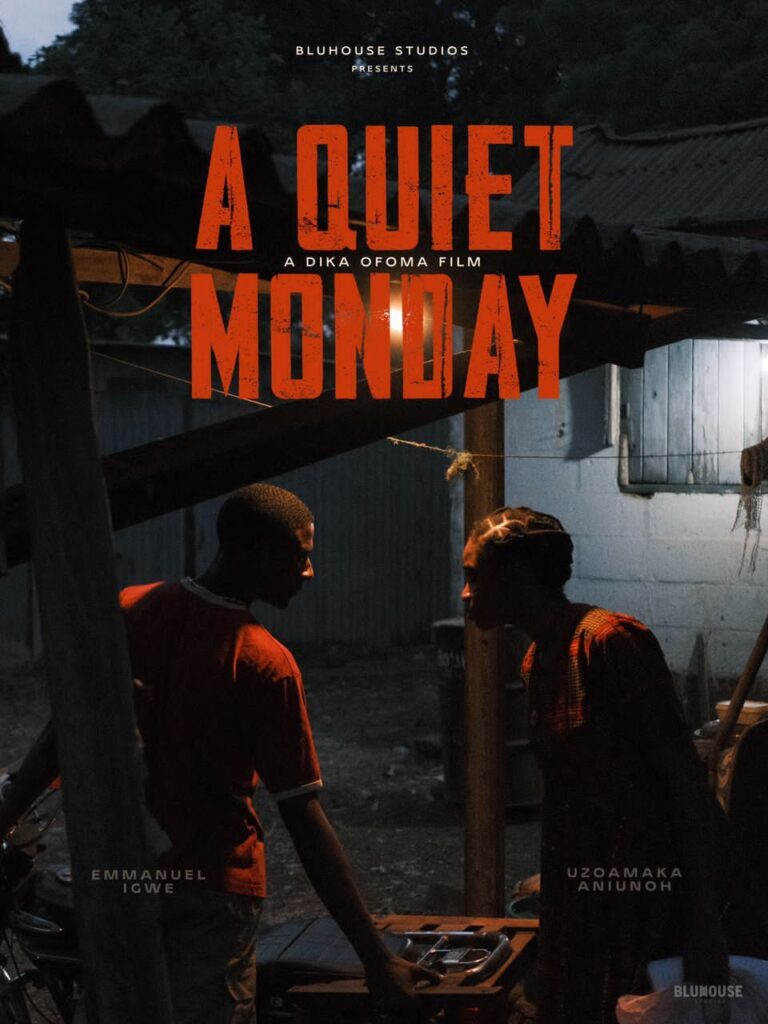
Siblings Kamnonu (Uzoamaka Aniunoh) and Ogbonnna (Emmanuel Igwe) are codependent. Kamnonu is a gifted tailor, and her younger brother supports her. A customer’s emergency cloth delivery on a Monday brings them into conflict with IPOB members. In the scuffle, Emmanuel is fatally injured, and the arrival of the police, who think them all IPOB members, now leaves Emmanuel’s life hanging in the balance.
A Quiet Monday’s strongest credit is that there aren’t many materials on the IPOB sit-at-home situation, at least not with the intimate approach Dika’s film has followed. This praise is double-edged in nature: because there aren’t many materials like it, there are few visual, IPOB narrative yardsticks against which to measure it. With more accounts, there will be a wider testing ground for this film. Regardless, this is an important film.
The film is technically sound, with a steady supply of musical accompaniment segueing scene after scene. Uzuomaka and Emmanuel deliver quiet, steely performances, and the cinematography sufficiently follows suit. While the lighting asks too much regarding suspending disbelief in a scene, it redeems itself in others.
A Quiet Monday bears witness to a normalised violation. It is a decent submission into the Nollywood canon by a young filmmaker whose films comment on how huge problems affect private, intimate relationships. As he did in his film, A Japa Tale, so has he now. However, we firmly expect much better work from Dika Ofoma in the future.
Join the conversation in the comments section or on Twitter.
Sign Up: Keep track of upcoming films and TV shows on your Google calendar.




3 Comments