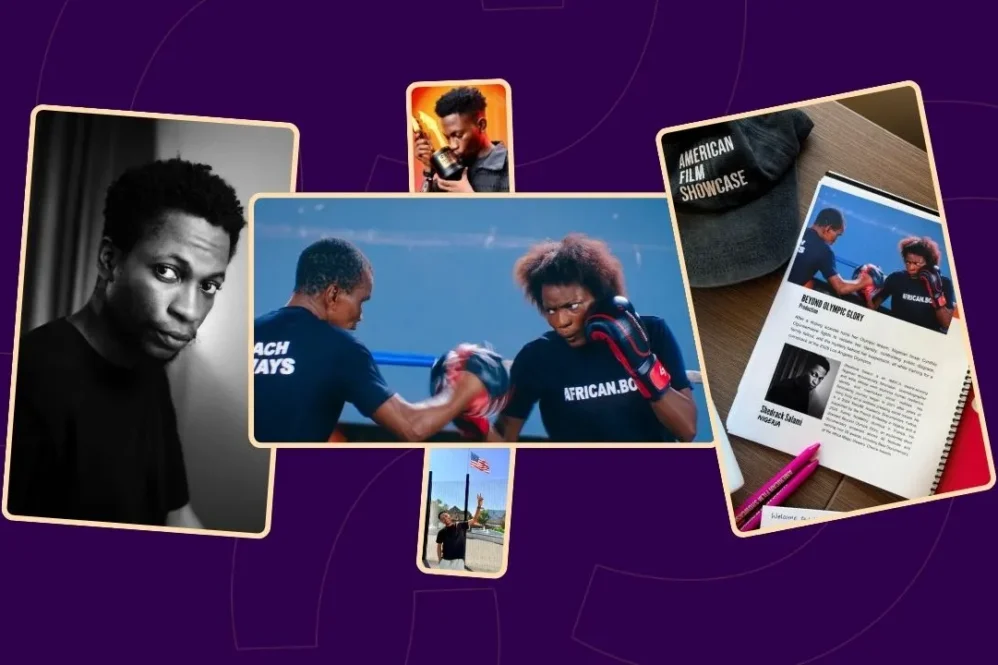
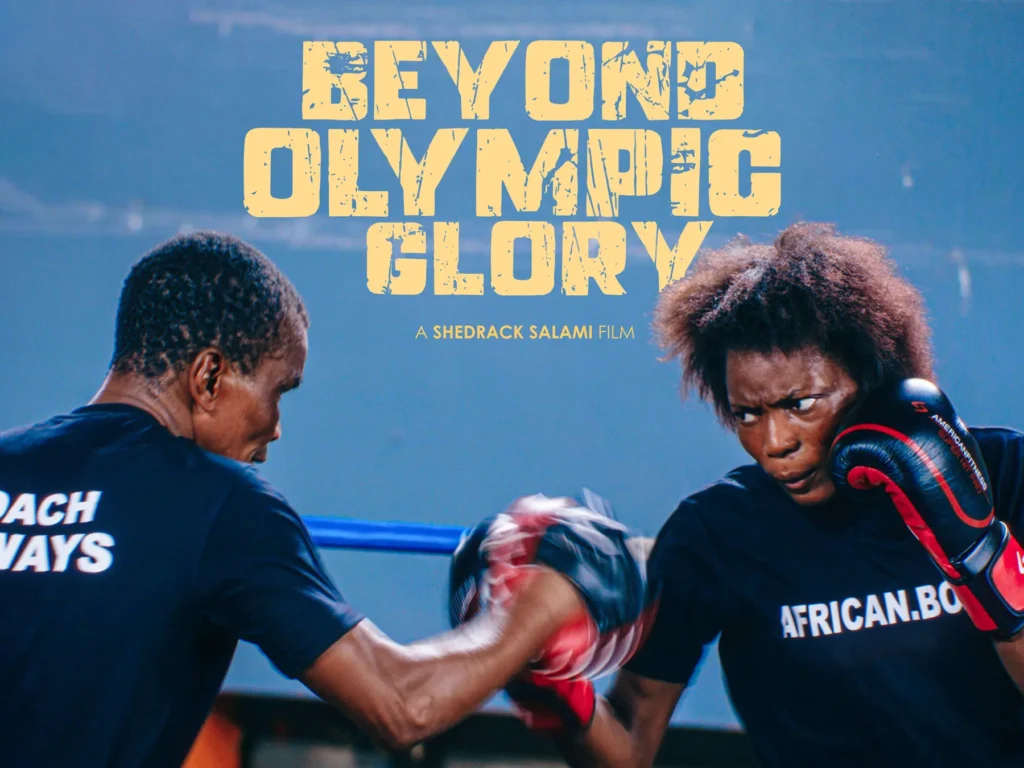
EXCLUSIVE: Beyond Olympic Glory (2025) follows Cynthia Ogunsemilore’s journey from Bariga to the 2024 Paris Olympics, where she was set to represent Nigeria in boxing. However, a doping allegation forced her to withdraw a day before her first fight. Today, the athlete is serving a two-year suspension from competition, which will end in December; and filmmaker Shedrack Salami is ready to expand the 20-minute film into a feature-length documentary.
The short film, supported by StoryMi Academy and the French Embassy, screened at over 25 international festivals including AFRIFF, Film Africa, and the Silicon Valley African Film Festival (where it had its US premiere). It also received more than 20 awards, including the Eastern Europe Film Festival Special Award and Best Documentary at the 2026 AMVCA.

“Since screening the short documentary, we’ve continued developing the feature through different labs, residencies and mentorship programs,” Salami reveals, in an exclusive interview with What Kept Me Up. This project has been in the works for about two years and the filmmaker hasn’t been working alone.
“I had the opportunity to work with mentors at Sunny Side of the Doc in La Rochelle, continued developing the project with my mentor Louise Monlaü (The Death Cleaner) and then refined it even further during the American Film Showcase residency,” he says.
Back in June, Salami was the only Nigerian among 12 filmmakers hosted at the 10-day intensive American Film Showcase (AFS) Sports Documentary Residency held in Los Angeles. Perks of this program, coordinated by the US Embassy, include mentorship, and the possibility of funding, with the goal of developing sports documentaries like Beyond Olympic Glory into feature-length films.
The residency also held a lot of personal sentiment for Salami, who had nursed a lifelong dream of visiting the United States. “To be there, representing Nigeria and sharing a story that started at home on an international platform, was a really emotional moment,” he admits. “It showed me that if a story is told with honesty and care, it can travel far beyond where it begins.”
As Cynthia Ogunsemilore’s story keeps making its way around the world, Salami too continues gaining valuable exposure from global audiences and film professionals. Experiences like the AFS challenged him to dig deeper into the events of Cynthia’s life, and explore the emotional and social questions surrounding her journey.
They also opened him up to new perspectives. “Being in a room with 12 filmmakers from 12 different parts of the world, all with different cultures, beliefs and ways of seeing life, was incredibly inspiring,” he adds.
But, apart from his fellow participants, the AFS also brought him in contact with faculty members of the University of Southern California School of Cinematic Arts including three-time academy award winner and Distinguished Professor Emeritus Mark Harris; Emmy, Peabody, and Gotham Award winner Carolyn Hepburn.
Leading sports filmmakers like Phil Hessler (Far From Home) and Emmy Award winners Osahon Tongo (NFL 360) and Danny Lee (Who is Stan Smith?), were pitch mentors for the cohort. “They didn’t just tell me how to make a better documentary,” the filmmaker shares. “They pushed me to ask deeper questions that completely changed how I approached my project.”
One of those big questions is this: Why does Ogunsemilore’s journey connect with so many people around the world? “It’s because at its core, her story is about resilience, identity, hope and the courage to keep going even when life becomes uncertain,” Salami explains. “These are emotions everyone understands, no matter where they come from.”
“Cynthia is also pursuing excellence in a sport where many people still believe women don’t belong,” he adds. “Her determination to challenge stereotypes speaks to anyone who’s ever been told they couldn’t do something because of who they are.” Salami himself can relate to this, since he is trying to grow his production company, Xtrovarts Visual Studios, globally, by telling deeply human Nigerian stories.
The positive reception of this documentary has forced him to confront some of his own internalized stereotypes about being an indigenous filmmaker. He goes on to disclose the biggest of them all.
“Coming from Nigeria, you almost get used to believing that these opportunities are for other people,” he begins. “Then you find yourself sitting in classrooms at one of the world’s leading film schools, exchanging ideas with filmmakers from across the globe, being mentored by people whose work you’ve admired, and you realise that sometimes the biggest barrier isn’t ability, it’s access.”
For the most part, documentary filmmakers in Nigeria earn little to no mainstream recognition despite telling heartfelt stories that echo around the world. Salami further clarifies, “Nigerian filmmakers don’t lack talent. If anything, we have some of the most resilient storytellers in the world, despite limited funding, infrastructure, and support in an industry that doesn’t really understand or value documentary filmmaking.”
“When I looked around that room at AFS, I didn’t feel like I didn’t belong,” he continues. “I felt like there should have been more of us. Eventually, the question I kept asking myself wasn’t, ‘Can we compete?’ It became, ‘What could happen if more of us had access to rooms like this?’”
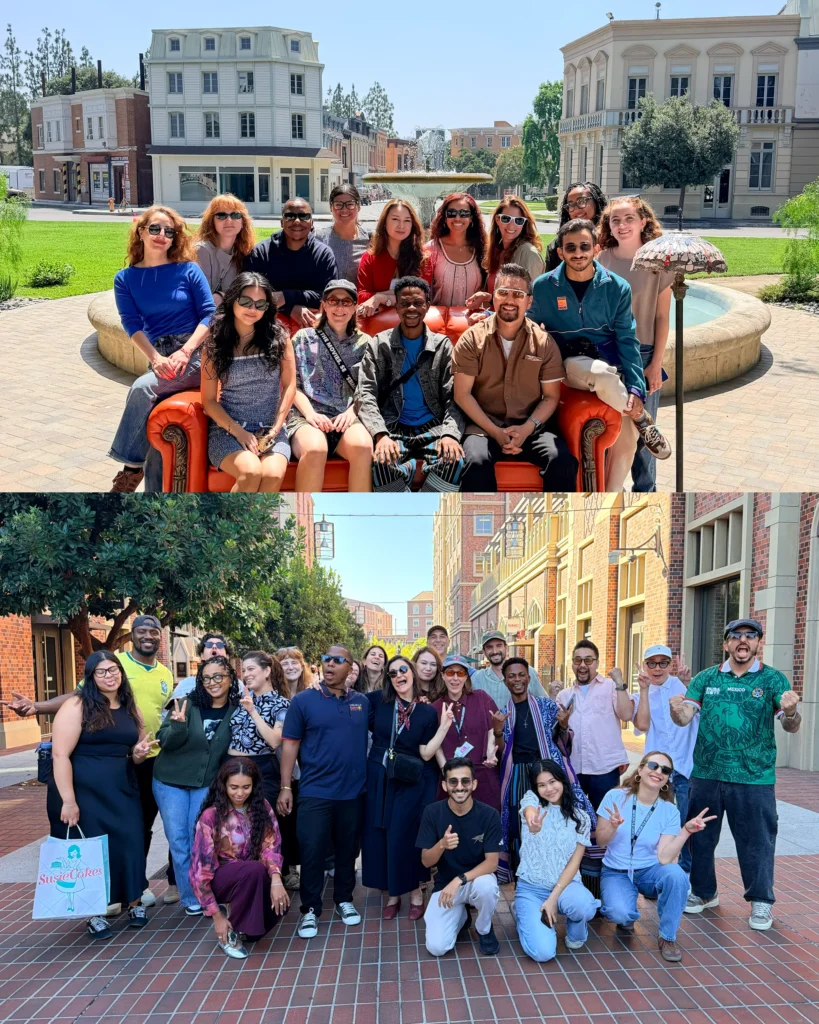
Being the only Nigerian selected from a pool of over 400 worldwide applicants may have amplified that emotion, because the filmmaker expresses the need to build structures that can shift the narrative of the Nigerian documentary industry. Still, he sees his residency as proof that Nigerian filmmakers can stand on any global stage, if given the opportunity. However, such glass-ceilings shouldn’t be broken for celebrations alone.
Salami’s AFS participation, for instance, also tested his reasons for expanding the documentary in the first place. “We watched several documentaries from filmmakers and studios around the world, especially the work coming out of Oscar award-winning studios,” he states, “and I came to realise that it’s not about the duration of a film. It’s about whether the story moves people, starts conversations and leaves a lasting impact.”
With that in mind, and with the end of Ogunsemilore’s suspension fast approaching, he felt the need to build up one of the core themes of his film; its clear portrayal of the boxer as someone who keeps on fighting for something bigger than herself.
“Cynthia is fighting for her family, her dreams and the opportunity to create a different future,” the filmmaker explains. “People might expect this film to simply answer what happened to her, but it’s much bigger than that. I saw the story in a new light during the residency so we started breaking it down and looking back at how her whole journey started.”
“Apart from that, I also started understanding that American mentors have different perspectives compared to their European counterparts,” he reflects. “So, in terms of production, a lot is changing from how I saw it initially.”
The feature is production-ready and Salami is set to begin filming the next chapter of Cynthia Ogunsemilore’s story. Moreover, he is actively seeking the funding, support, and partnerships that will help bring it to life. He adds, “I genuinely believe audiences will discover a story that’s far more universal than boxing”.
Become a patron: To support our in-depth and critical coverage—become a Patron today!
Track Upcoming Films: Keep track of upcoming films and TV shows on your Google calendar.