Hollywood has never really stopped (won’t stop) revisiting its own history. Old films get remade, franchises return years after they seem finished, and familiar characters find new audiences through sequels, reboots, and spin-offs. Franchises like Star Wars, Jurassic Park, Ghostbusters, Top Gun, and Mission: Impossible have all found ways to extend their lives far longer than their original runs. Even when audiences complain about the lack of originality, studios comb through old titles because people already know them.
Nollywood has had its fair share of titles with second and third parts. Our industry has shown an appetite for returning classic characters and stories, though the motive for doing so at the moment feels as much personal as it is commercial because the industry is relatively young and the audience’s relationship with these characters is somewhat fresh.
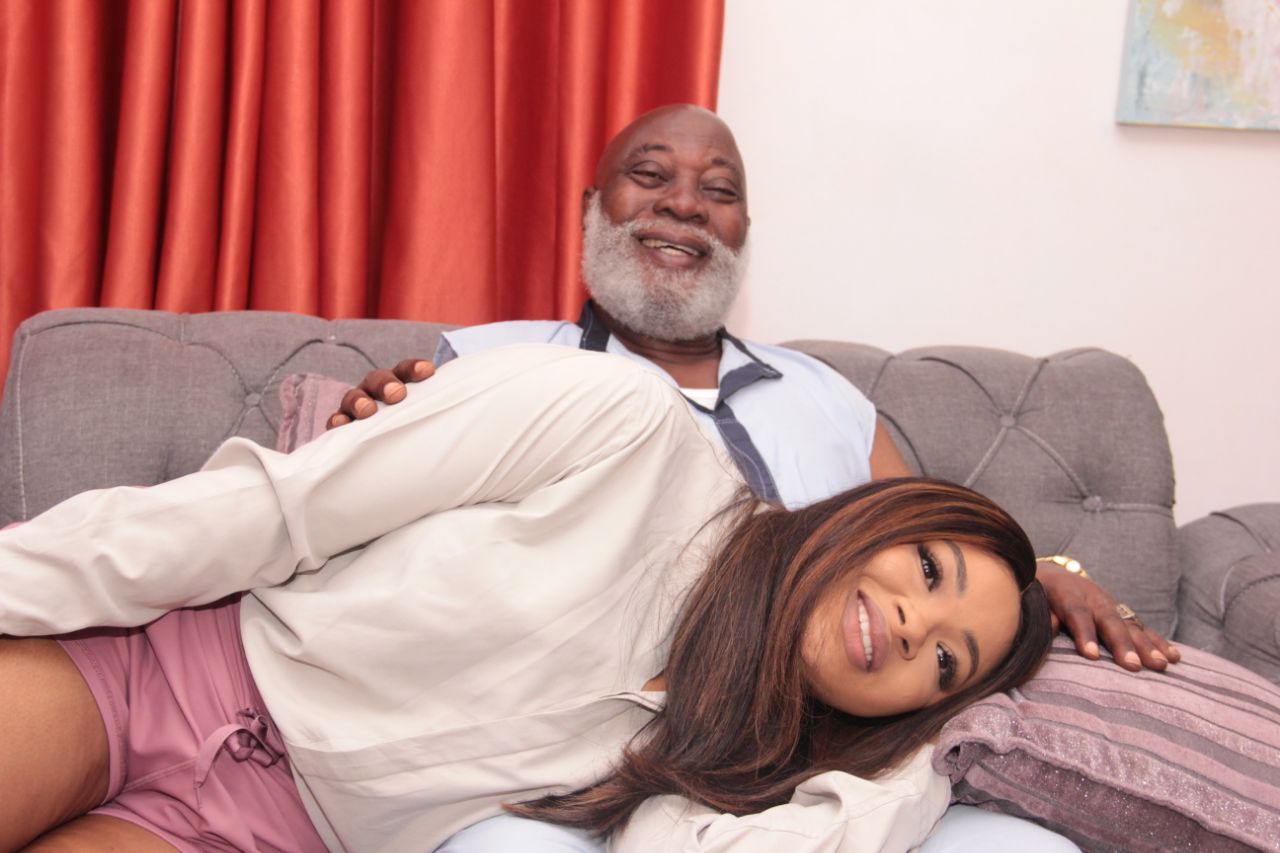
The latest example arrives this July with The Return of Omotara Johnson. The film marks Bukky Wright’s producing return to Nollywood after making an acting return in Something About The Briggs and Red Circle in 2025. It also returns to a character that audiences are familiar with. Omotara Johnson first arrived in the late 2000s (2008/2009) home video era, a Yoruba-language drama built around the titular character, known as OJ, played by Wright. OJ is wealthy, controlled on the surface, but highly destructive underneath. The story follows her fixation on her friend Kemi Ajibodu’s fiancé, Tunde Bamgbopa, and the chain of betrayal, manipulation, and violence that follows. It was a film defined by excess, emotion, and a central character who refused to be easily categorised as hero or villain. Alongside a memorable soundtrack by Tope Alabi, that character became etched in memories.
The current cycle of revivals is not without precedent. Play Network Studios built much of its early identity around reviving familiar Nollywood properties for a new generation. Beginning with Living in Bondage: Breaking Free, the company followed with titles including Rattlesnake: The Ahanna Story, Nneka the Pretty Serpent and Aki and Pawpaw, while also producing the Netflix original reinterpretation Glamour Girls (with a followup still expected). Although several of these films received theatrical releases, they largely found their widest visibility during the period when post-theatrical licensing deals with streaming platforms, particularly Netflix, became a defining part of Nollywood’s distribution model. In retrospect, Play Network helped demonstrate that Nollywood’s catalogue could be mined for contemporary audiences.
However, there is a difference in how revived titles have been returning in the last 2-3 years. Increasingly, Nollywood is reviving the original stars and characters that built these stories’ reputations in the first place, making the relationship between performer and role part of the commercial proposition.
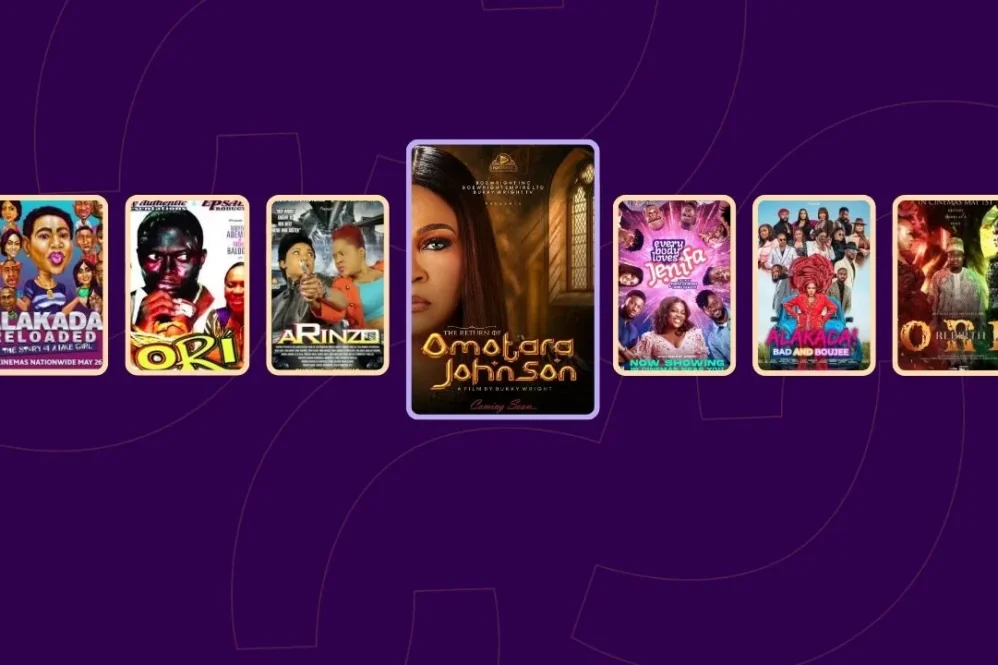
Muyiwa Ademola returned to one of Yoruba cinema’s most beloved titles with Ori: The Rebirth in 2025. More recently in 2026, Iyabo Ojo revisited a story she first told more than a decade ago with The Return of Arinzo. Funke Akindele continues to build on the enduring popularity of Jenifa. Toyin Abraham’s Alakada franchise remains active more than fifteen years after it began. Notably, these are all actor-producers who have worked extensively in the Yoruba film industry, a segment of the industry that has dominated the box office in recent years.
Among the recent examples, Ori: The Rebirth perhaps best demonstrates the commercial potential of legacy storytelling. The original Ori, released in 2004, remains one of Muyiwa Ademola’s most celebrated works. More than twenty years later, Ori: The Rebirth arrived in cinemas and quickly became one of that year’s biggest successes. The film opened strongly and went on to cross 400 million naira at the 2025 Nigerian box office.
A similar story can be found in The Return of Arinzo. More than a decade after the release of the original Arinzo in 2013, Iyabo Ojo revisited the story with a larger scale production and an expanded cast that included Funke Akindele, Mercy Aigbe, Bimbo Akintola, Uzor Arukwe, Adjetey Anang and Enioluwa Adeoluwa. The film opened to 104.8 million naira during its first weekend and eventually crossed 250 million naira at the box office, becoming one of the strongest-performing Nollywood titles of 2026 so far.
The relative success of films like The Return of Arinzo suggests more than audience nostalgia for familiar titles. In many cases, it is tied to the return of the actors who first made these stories (and characters) resonate with viewers.
Case study: Funke Akindele has played many characters across television and film, but Jenifa remains the role most closely associated with her public identity. The character has endured for nearly two decades, survived multiple formats, and followed Akindele through different stages of her career.
People who grew up on Nollywood watched Bukky Wright as part of an era when the industry’s biggest stars carried films on the strength of their performances, star power and the loyalty they had built with viewers over time. Her absence from the screen was felt especially for audiences who associated a period in Nollywood with faces like hers.
When Funke Akindele introduced Jenifa in 2008, it couldn’t have been foreseen to have relevance nearly two decades later. Yet the character has survived changing audience tastes, the collapse of the DVD market, the rise of streaming, and the return of cinema as the industry’s commercial centre. The character has remained part of popular culture through films, television, and spin-offs. The success of Everybody Loves Jenifa (2024) attests to the fact that audiences were and are still willing to follow her story, though Akindele’s box office pull remains a major part of that equation, as her projects consistently command strong audience turnout regardless of title or format. The same thing can be said for Toyin Abraham’s Yetunde in the Alakada films, whose relevance has outlived the period it was created in.
The term ‘legacy’ we’re ascribing to these titles is due to the relationship between the main characters and the actors behind them, also how they have influenced popular culture in the country. Alongside Funke Akindele’s Jenifa, Toyin Abraham’s Yetunde character helped popularise the fish-out-of-water trope in Nollywood comedy. Also, their incorrect broken English and accents, exaggerated social ambitions and distinctive mannerisms became part of popular culture, influencing comedy, everyday conversations and even other performers such as Falz, whose comedic persona similarly drew on distorted English for humour.
In Nollywood, certain roles have grown past individual films and become central to how audiences remember those actors.
Notably, when these stories return, they avoid presenting themselves as straightforward sequels just like Hollywood has gradually been moving away from labels like Part II, Chapter Two or Part Three. A recent Variety report observes that studios are increasingly preferring terms such as “companion piece”, “reimagining”, “from the world of” or “a new chapter”. The thought process is that audiences may still enjoy familiar stories, but they do not always want to feel like they are buying the same thing again. Speaking in the report, veteran marketing and distribution executive Marc Weinstock argues that “audiences have been trained to think ‘sequel’ means homework… so when you put a ‘2,’ ‘3’ or ‘4’ in the title, it gets a groan.”
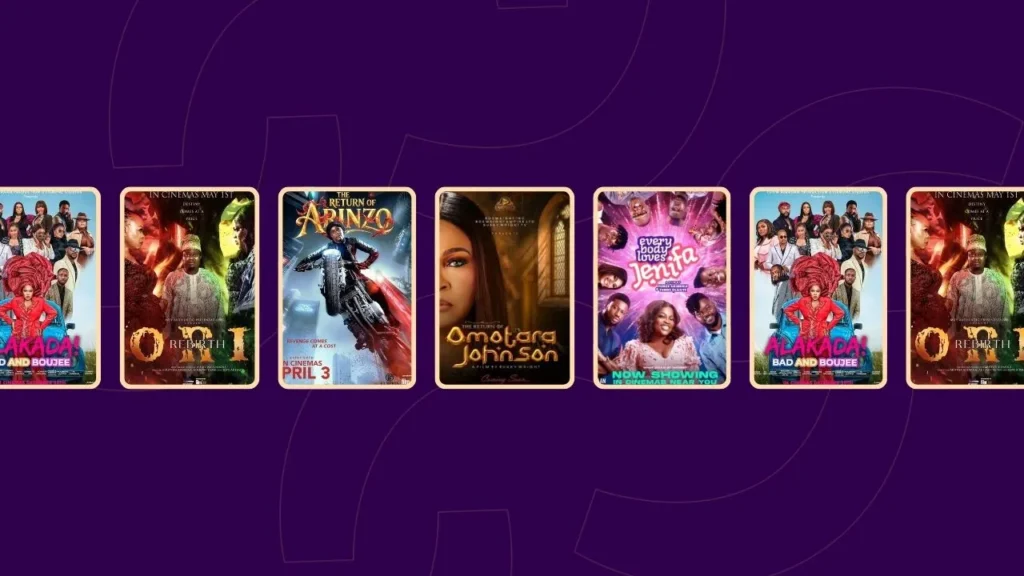
Whether by design or instinct, Nollywood’s recent legacy titles have increasingly favoured this approach as well. Audiences are getting The Return of Omotara Johnson instead of Omotara Johnson Part 2, there is The Return of Arinzo. Muyiwa Ademola did not call his film Ori 2 but Ori: The Rebirth. Even Everybody Loves Jenifa and Alakada: Bad and Boujee present themselves as standalone events rather than numbered chapters.
The choice of words acknowledge the audience’s memory, using the well-known IP (legibly pushed in the boldest fonts on the film posters), while promising something new. Even the recent Bolaji Ogunmola-produced Ajosepo: The Gathering taps into it. These films are selling familiarity, but they are also selling the idea that time has passed and circumstances have changed.
There is a practical aspect to this as well. Veteran actors looking to make a splashy big screen return trigger nostalgia in older audiences while younger viewers get to connect to a part of Nollywood history they may know only through stories or clips online.
This does not mean every old franchise or title should return. Nostalgia alone cannot sustain a film. Audiences may come because they recognise a title or character, but they stay because the story still works for them. This is especially important if you are not a star actor-producer with a strong pull.
So, how do you honour the original while remaining relevant? How do you bring back a beloved actor without reducing them to a symbol of the past? How do you revisit a character without relying entirely on memory?
As The Return of Omotara Johnson prepares to open in cinemas on July 10 (with a newly recorded revised track by Tope Alabi), those questions are more relevant than ever. Even Mount Zion joins the revival party later in October with the big screen return of Agbara Nla(:The Return). Every mature film industry eventually reaches the point where its own history becomes part of its commercial future. Nollywood appears to have arrived at that moment. The challenge now is deciding what to do with it.
Become a patron: To support our in-depth and critical coverage—become a Patron today!
Track Upcoming Films: Keep track of upcoming films and TV shows on your Google calendar