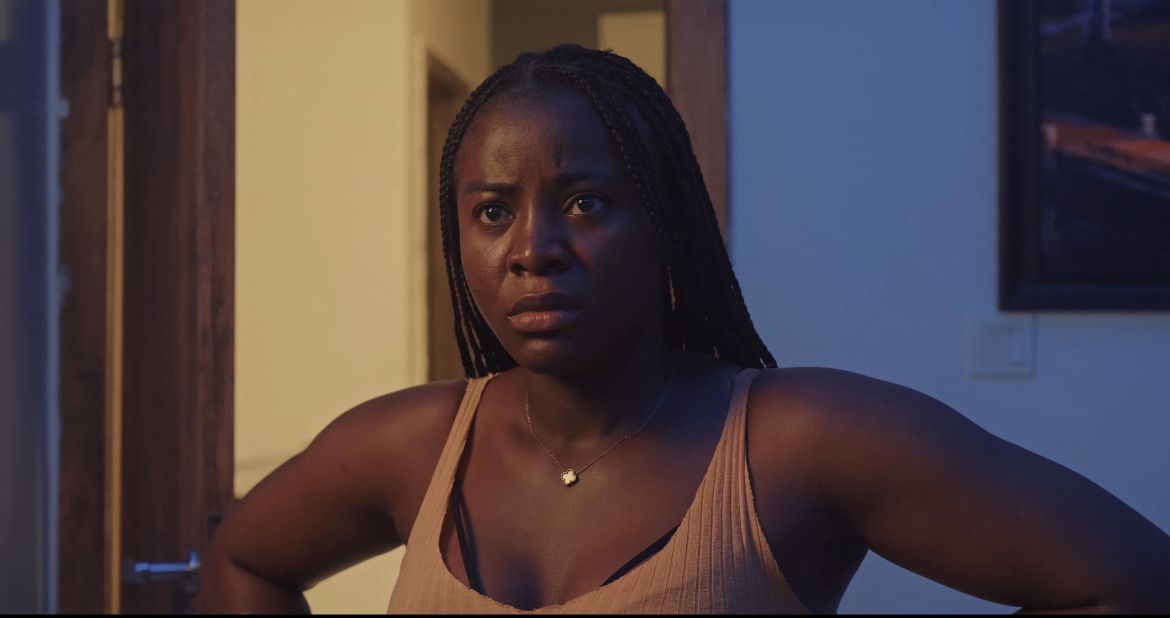
Sonia John’s Fright Night is a mystery thriller that uncovers the truth of a murder four years prior. Six people wake up tied up in a strange house. And as the night unfolds, they realise they are all involved, one way or another, in the death of a young girl. The race to survive the night is one, but along the way, we find out disturbing truths about their pasts.
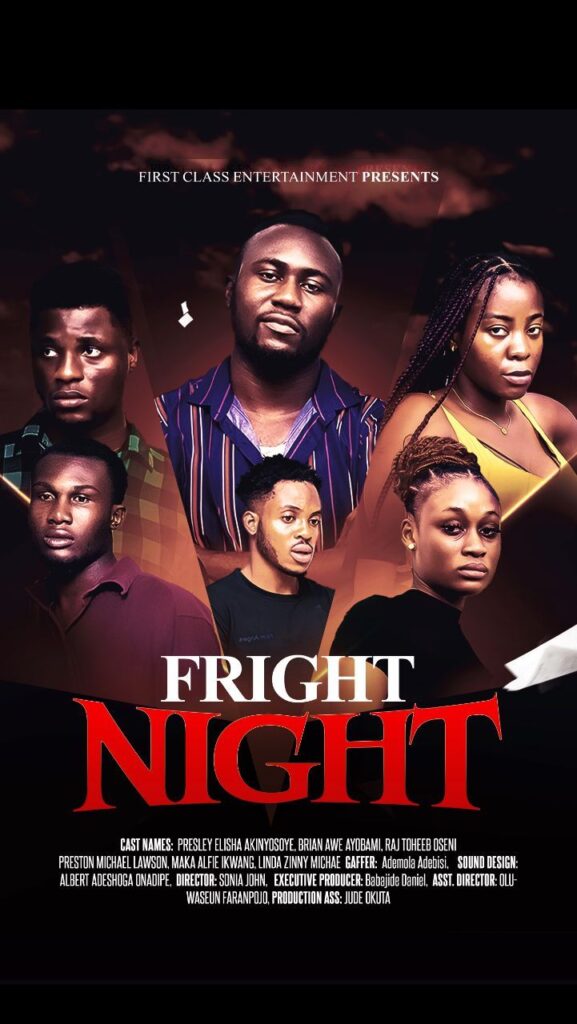
As with all works of art, Fright Night has its mind in a good place, but the execution is sub par. Visually, the film stays decent, but it falters on every other front. The soundtrack, while appropriate, runs on a loop for so long it becomes jarring. And sometimes, the camera angles can be questionable. However, the real problem with the film is the acting.
Clearly, the cast isn’t very experienced, but the performances are so jarringly bad they distract the viewer from the story. Particularly questionable is Brian, played by Awe Ayobami, who tries to present an aloof, suave performance but fails. He is the epitome of the short film’s bad acting. The cast tries to do one thing but cannot execute it because of a lack of skill. The same applies to Amaka (Alfie Ikwang), whose character has a very confusing range of emotions down to the final scene. Apply as desired to anybody else.
Finally, the story’s moral core is a tad extreme. And this is no problem if it were that hardcore amoral type of story. It clearly sets itself up as a film about righting wrongs. Each character, from the nurse who abandoned a patient for dinner to the actor who was the reason the girl died, everyone had a hand. But when you punish a taxi driver for trying to avoid trouble, then you need to readjust the moral tone. There is a strong hint of sanctimony conveyed through Brian, who, one suspects, is the writer’s (Arebun Joshua) voice. He dishes verbal justice left and right but, in the end, doesn’t seem to recognise his sanctimonious flaw. And the film itself doesn’t recognise this flaw. It makes the viewer question the overall justice framework within the film. This sums up the film: good heart, bad execution.
Share your thoughts in the comments section or on our social media accounts.
Keep track of upcoming films and TV shows on your Google calendar.